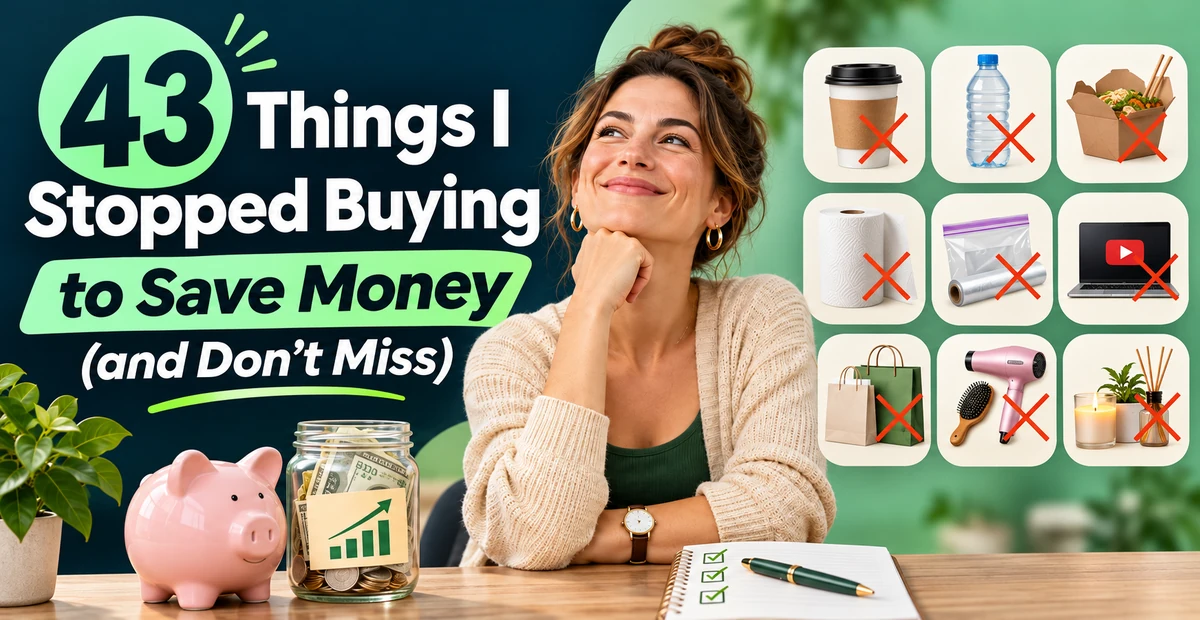
43 Things I Stopped Buying to Save Money (and Don’t Miss)
This post may contain affiliate links, which means I may earn a small commission at no extra cost to you if you make a purchase. To learn more, read my full affiliate disclosure
There was a month, not long after I started my first job, when I checked my bank statement and couldn’t explain where a big chunk of my pay had gone. There was no big purchase and no emergency. It was coffee, lunches, rides, snacks and small “why not” buys that each felt too tiny to matter.
That was the moment I realized something I’m still learning: earning more doesn’t automatically mean saving more. The little things were quietly eating my income, one swipe at a time.
So I started paying attention. Over time, I stopped buying a long list of things I thought I needed, and I honestly don’t miss most of them.
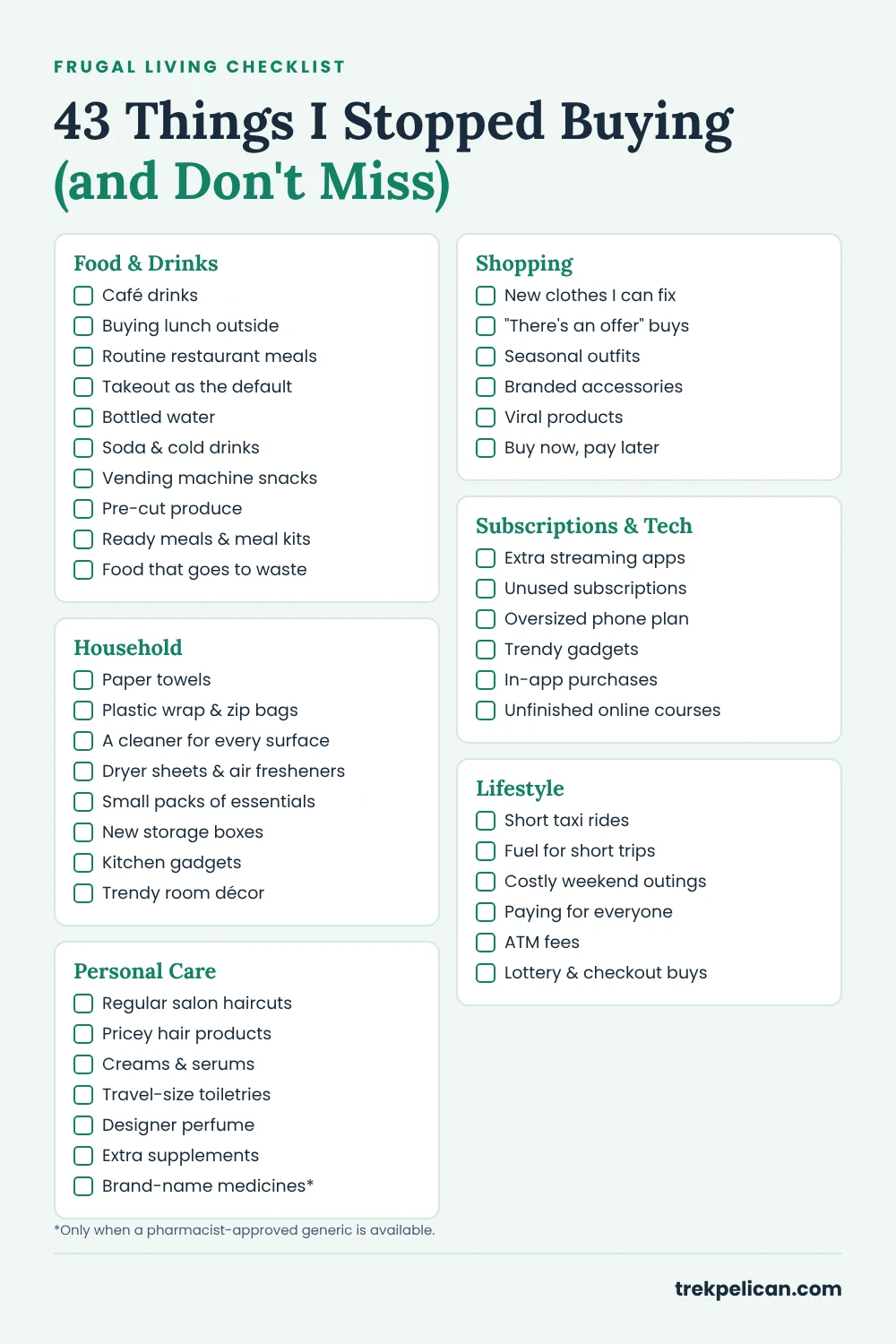
These aren’t extreme cuts. I still spend money on things I enjoy, and I never cut corners on health or food quality. This list is about the “background spending” that adds up without making life any better. Here are the 43 things I stopped buying, what I do instead and how much each swap can realistically save.
In This Article ↓
- Quick Look: Why Small Purchases Add Up So Fast
- How I Decided What to Stop Buying
- Food and Drinks (1–10)
- Kitchen and Household (11–18)
- Personal Care and Health (19–25)
- Clothing and Shopping (26–31)
- Subscriptions and Tech (32–37)
- Lifestyle and Everyday Habits (38–43)
- What I Went Back To (and Why That’s Okay)
- What I Will Never Cheap Out On
- How Much I Save in a Year
- How to Make Your Own “Stop Buying” List
- Free and Paid Tools to Help You Stick to It
- Helpful Books for Spending Less
- Frequently Asked Questions
- Final Thoughts: Spend on What Actually Matters
- Sources
Quick Look: Why Small Purchases Add Up So Fast
Small purchases feel harmless because each one is cheap. The trouble is that they repeat. A few numbers show just how big these “small” categories really are:
• Eating out is a major expense. The average U.S. household spent $4,142 on food away from home in 2025, which includes restaurants, takeout and delivery, according to the Bureau of Labor Statistics (BLS).
• Coffee shop prices keep climbing. Restaurant payment platform Toast found the median price of a regular hot coffee reached $3.61, and a cold brew $5.55, in December 2025.
• Subscriptions hide in plain sight. In a C+R Research survey, people guessed they spent about $86 a month on subscriptions, but their itemized total came to $219.
• Fees cost real money too. Bankrate’s 2025 study found the average out-of-network ATM withdrawal now costs $4.86.
You don’t need to cut everything. Start with the purchases you make most often, like drinks, lunches and rides, because repeat spending is where the biggest savings hide.
How I Decided What to Stop Buying
My frugal habits started during my student days, when I had a limited budget and had to think about every purchase. I shared how that began in my 45 frugal living tips post. Once I started working, I relaxed a little too much. My income went up, but my savings didn’t grow the way I expected.
I didn’t want to live on the bare minimum. I wanted to build savings without sacrificing my quality of life. So I used three simple tests before cutting anything:
1. Would I buy this again today? If the honest answer was “no,” it went on my stop list.
2. Does it make my life better, or is it just a habit? Many purchases were pure routine, not real enjoyment.
3. What does it cost per use? A cheap item I replace every month can cost more than a good one that lasts for years.
Cut what you won’t miss so you can keep spending on what you love. Frugal living isn’t about saying no to everything. It’s about saying yes to the right things.
For each item below, I’ll share why I stopped, what I do instead and its savings potential: Low (under about $100 a year), Medium (about $100 to $500 a year) or High (more than $500 a year) for a typical habit.
Food and Drinks (1–10)
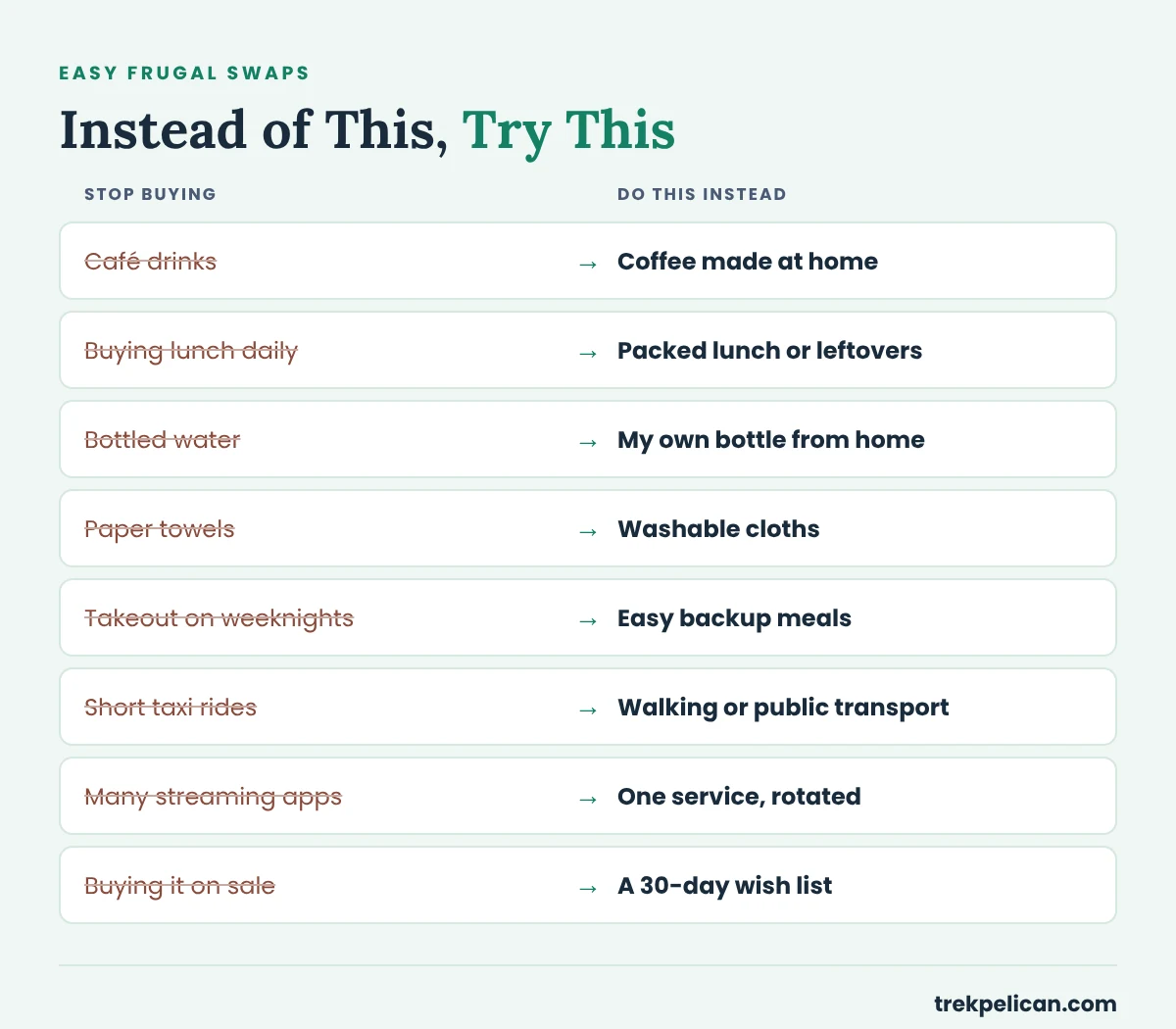
1. Café drinks
This one surprised me the most. A coffee here and a cold drink there felt like such a small daily expense that I barely noticed it. When I added it up, I couldn’t believe how much I could save just by making coffee at home.
What I do instead: I make my coffee at home before I leave. A café visit is now a treat I choose, not a daily routine.
Savings potential: High
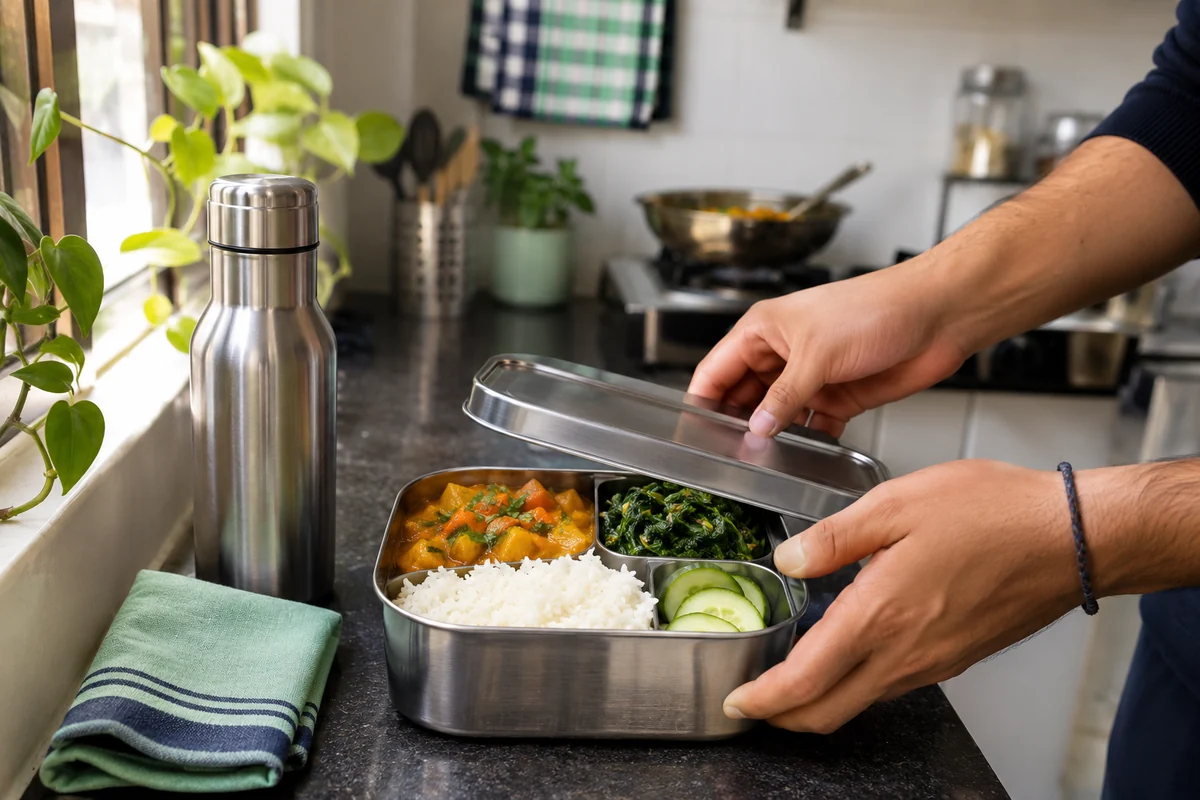
2. Buying lunch outside every day
In the city where I lived, food prices outside were really high. What I spent on one meal outside could cover two to three days of food if I cooked it at home. Hygiene mattered to me too, because at home I know exactly what goes into my food and how it’s made.
What I do instead: I wake up early and prepare my lunch at home, then carry it with me. I only buy food outside when I’m too tired to cook, usually after a long, exhausting day of work the day before.
Savings potential: High
3. Restaurant meals as a routine
When I was a student, I rarely went to restaurants at all. Ordering online saved me time and travel costs, so that became my habit instead.
What I do instead: Today I visit a restaurant maybe once or twice a month, and some months not at all. I go when I genuinely want to explore a new dish or try something different, so it feels special rather than routine.
Savings potential: High
4. Takeout and delivery as the default
Ordering online was convenient during my student days, but delivery fees, service fees and higher app prices quietly add up. One delivered meal can cost almost double what it would at the counter.
What I do instead: Cooking at home is my default now. I order only on days when I’m genuinely too tired to cook, and I treat it as a choice, not a habit.
Savings potential: High
5. Bottled water
Buying plastic bottles of water outside meant paying for packaging more than for the water itself. It also added up to a lot of plastic every week.
What I do instead: I carry my own thermos water bottle from home, filled before I leave. I don’t buy bottled water outside.
Savings potential: Medium
6. Soda and cold drinks
Even as a student, I avoided soda and cold drinks most of the time. If I wanted something refreshing, I bought fresh fruit juice from a juice shop instead, which felt better and gave me something real.
What I do instead: I drink water, and an occasional fresh juice. I’ll have a cold soda or energy drink only rarely, like when I’ve eaten too much and need help with digestion, or when the heat has left me drained.
Savings potential: Medium
7. Vending machine and packaged snacks
Vending machines and convenience store snacks are some of the most expensive food you can buy for what you get. It’s easy to grab something without thinking.
What I do instead: I carry fruit, nuts or homemade snacks. I still buy packaged snacks sometimes, but not every day.
Savings potential: Medium
8. Pre-cut fruit and vegetables
Pre-cut produce saves a few minutes but often costs much more than buying the whole item. It also spoils faster once it’s cut.
What I do instead: I buy whole fruit and vegetables and cut them myself when I cook.
Savings potential: Medium
9. Ready meals and meal subscription boxes
Meal kits and ready meals look convenient, but the price per serving is much higher than cooking from scratch. Kits also go bad if you don’t cook them in time.
What I do instead: I plan simple meals for the week and cook them myself. My guide on how to cut your grocery bill in half explains my exact routine.
Savings potential: High
10. Food bought in excess that goes to waste
This is a hidden leak. Buying more than you can eat means some of it ends up in the bin. A Penn State study estimated the average U.S. household wastes about 31.9% of the food it buys.
What I do instead: I shop with a list, check my fridge first and buy only the portions I’ll actually cook.
Savings potential: High
Kitchen and Household (11–18)
11. Paper towels and paper napkins
Using rolls of paper towels for every small spill is money you’re literally throwing away.
What I do instead: I use washable cloths and cut old T-shirts into cleaning rags. I keep one roll of paper towels for really messy jobs.
Savings potential: Low
12. Plastic wrap and zip bags
These are constant repeat buys. Most of them get used once and thrown away.
What I do instead: I store food in reusable containers and jars, and cover bowls with a plate.
Savings potential: Low
13. A different cleaner for every surface
Separate sprays for the kitchen, bathroom, glass and floors mostly do the same job. A cabinet full of them costs far more than it needs to.
What I do instead: I rely on basics like dish soap, white vinegar and baking soda for most everyday cleaning. I never mix vinegar or other cleaners with bleach.
Savings potential: Low
14. Dryer sheets and air fresheners
Both are small purchases that never end. Air fresheners only cover smells rather than fixing them.
What I do instead: I open windows, clean regularly and skip dryer sheets completely. My clothes are fine without them.
Savings potential: Low
15. Small packs of household essentials
Buying soap, detergent, toothpaste or shampoo in small packs every few days costs more per unit. Every extra trip to the store is also another chance to buy things you didn’t plan.
What I do instead: I buy essentials in larger quantities once a month, from big stores or online when there’s an offer, but only for items already on my list.
Savings potential: Medium
16. New storage containers
Getting organized can feel like it requires buying new boxes and bins. For me, it never did.
What I do instead: Because I buy staples in larger packs, I bought a few good containers once, and they’re big enough to store cereals, rice, spices and sugar. I reuse jars too. The cardboard boxes from my online orders get a second life storing clothes and other things, sometimes reshaped to fit the space.
Savings potential: Low
17. Unnecessary kitchen gadgets
A special tool for avocados, another for garlic, another for slicing strawberries. Most gadgets get used a few times and then just take up space.
What I do instead: A good knife, a cutting board and a few basic pans handle almost everything.
Savings potential: Medium
18. Unnecessary room decorations
Trendy décor pieces look great online but lose their charm quickly. Then the next trend arrives.
What I do instead: I keep my space simple and add only things I truly like or need.
Savings potential: Medium
Personal Care and Health (19–25)
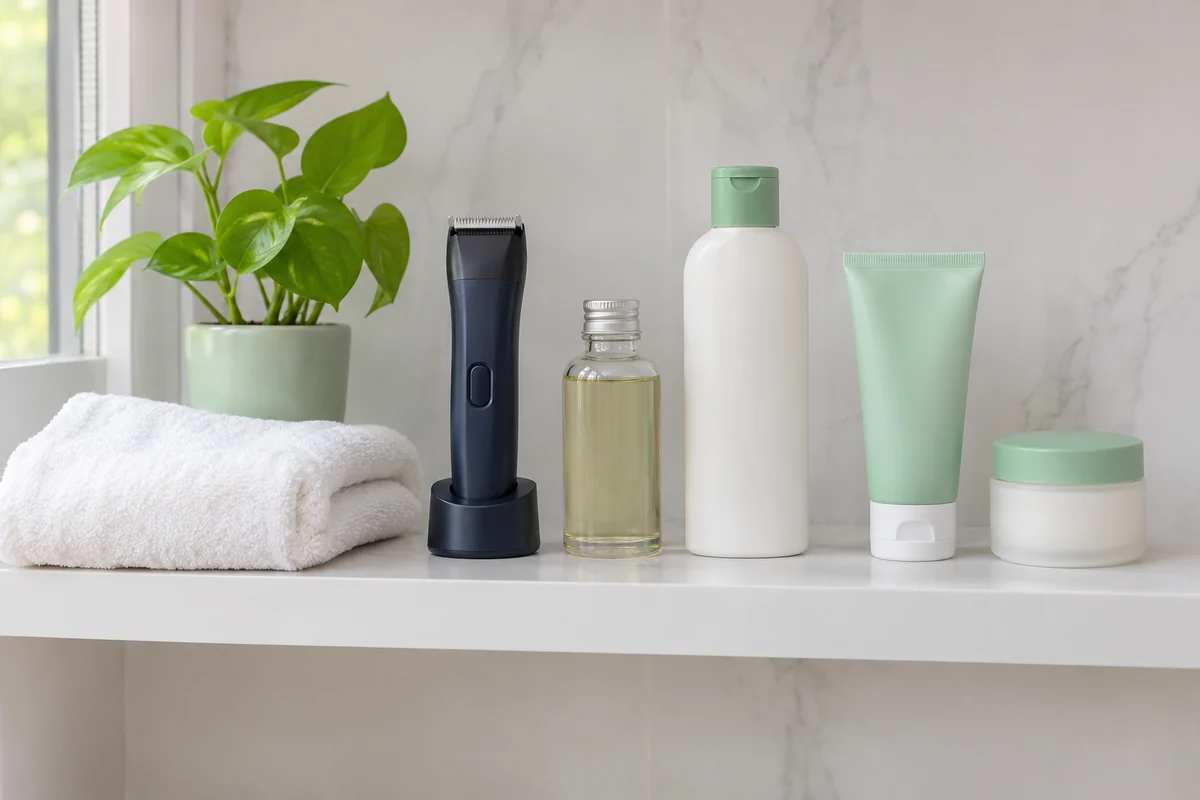
19. Regular salon haircuts
I visit a salon rarely, usually about once every two months. The rest of the time, I manage at home.
What I do instead: I use a trimmer for my beard and hair and check them every week, cutting a little at a time so it never grows out of shape. For the back of my head, I ask a roommate for help. To be honest, I don’t recommend this for everyone. It takes me almost an hour, and it only works because I’ve done it regularly for a long time.
Savings potential: Medium
20. Frequent shampooing and pricey hair products
Shampoo every day, hair gel and fancy hair treatments add up quickly, and harsh products aren’t always kind to your hair either.
What I do instead: I shampoo about twice a week, or after a long trip or before a special occasion. I oil my hair with coconut oil on a similar schedule, and I skip hair gel completely.
Savings potential: Medium
21. Cosmetic creams, serums and multi-step skincare
Social media makes it look like you need serums, toners and a shelf of creams. My skin doesn’t need all of that.
What I do instead: I wash my face before bed, or after a long trip, and then use a moisturizer. That’s my routine. Once a week, I use simple homemade skin and hair care instead of buying extra products.

Savings potential: Medium
22. Travel-size toiletries
Travel-size bottles look cheap, but they cost much more per ounce than full-size products. They also run out fast.
What I do instead: I refill small reusable travel bottles from the products I already have at home.
Savings potential: Low
23. Expensive perfumes
Designer perfume is a luxury that runs out and needs replacing. It’s an easy place to overspend.
What I do instead: I stick to one affordable scent I like and use it slowly.
Savings potential: Medium
24. Unnecessary supplements
It’s easy to buy supplements because of ads and online trends rather than real need. Many end up half-used in the cupboard.
What I do instead: I focus on simple, home-cooked food and would only take a supplement if a doctor recommended it.
Savings potential: Medium
25. Brand-name medicines when generics are available
Many people pick the familiar brand-name medicine without realizing a generic version may exist. Generic medicines must have the same active ingredient, strength and dosage form as the brand-name drug. The Federal Trade Commission notes they typically cost 80–85% less, based on FDA estimates.
What to do instead: Ask your pharmacist whether a suitable generic is available. Never switch a prescription without checking with your doctor or pharmacist first.
Savings potential: Medium
Clothing and Shopping (26–31)
26. New clothes when old ones can be fixed
A loose button, a broken zip or a small tear used to feel like a reason to buy something new. Most of the time, it’s a five-minute fix.
What I do instead: I repair or reuse before I replace. When I do need something, I check what’s already in my closet first and look at second-hand options before buying new.
Savings potential: High
27. Things just because there’s an offer
My first holiday season with a credit card taught me this the hard way. Cashback sounded like free money, so every offer felt like a smart deal. By the end of the season, I had used about 70% of my card limit. I shared the full story in my guide to recovering financially after the holidays.
What I do instead: An offer only counts as a saving if the item was already on my list. Otherwise, it’s just spending with a discount sticker on it.
Savings potential: High
28. Unnecessary seasonal clothing
A new season doesn’t automatically need new outfits. Most of the time, last year’s clothes are still perfectly fine.
What I do instead: I check what I already own before each season and only fill a real gap.
Savings potential: Medium
29. Branded fashion accessories
A logo can double the price of a bag, belt or wallet without making it last longer.
What I do instead: I choose well-made, simple pieces that do the job and last.
Savings potential: Medium
30. Trendy products and things bought to impress others
Viral products and “everyone has it” buys give you a few days of excitement, and the cost stays on your statement. Buying something just so others notice it rarely feels good for long.
What I do instead: I use a waiting rule: 48 hours for small things and 30 days for bigger ones. Most of those urges fade, and the ones that stay are things I truly value.
Savings potential: High
31. Buy-now-pay-later impulse purchases
Splitting a price into small payments makes things feel cheaper than they are, just like a credit card did for me. The CFPB has found that many buy-now-pay-later users carry several of these loans at once, which makes the total easy to lose track of.
What I do instead: If I can’t pay for a non-essential item in full today, I don’t buy it today.
Savings potential: High
Subscriptions and Tech (32–37)
32. Multiple streaming services
Paying for several streaming apps while watching only one or two means the rest are running in the background every month.
What I do instead: I keep one service at a time and cancel when I’ve finished what I wanted to watch.
Savings potential: Medium
33. Unused subscriptions and premium app versions
After my expensive holiday season, cancelling subscriptions was one of the first things I did. Free trials that turn into paid plans, and “pro” versions of apps you barely use, are easy to forget.
What I do instead: I go through my bank statements, list every recurring charge and cancel what I don’t use. I start with free versions of apps and only upgrade if I really need a missing feature.
Savings potential: High
34. A phone plan bigger than I need
Many people pay for far more data and minutes than they actually use. It’s one of those bills that’s easy to set and forget.
What I do instead: I budget for my phone plan every month and choose one that matches my real usage of calls and data.
Savings potential: Medium
35. Trendy gadgets and extra phone accessories
New gadgets and a drawer full of chargers, cases and stands look useful at first. Most of them barely get used.
What I do instead: I use my devices until they really need replacing, repair them when I can, and keep only the accessories I use every day.
Savings potential: High
36. Paid mobile games and in-app purchases
A few dollars for extra lives or coins feels like nothing. Over a month, those little taps add up.
What I do instead: I stick to free games without in-app purchases, or I just put the phone down.
Savings potential: Medium
37. Unnecessary online courses
Buying a course on sale can feel like progress, even if you never finish it. Learning new skills is something I don’t cut corners on, but buying courses I won’t complete is a different thing.
What I do instead: I start with free resources and library books. I pay for a course only when I have a clear goal and the time to finish it.
Savings potential: Medium
Lifestyle and Everyday Habits (38–43)
38. Unnecessary taxi and ride app trips
In college, I mostly took the bus and saved cabs for when they were truly needed. Short rides because you’re running late or don’t feel like walking add up fast, especially with surge pricing.
What I do instead: I use public transport for regular trips and plan my time so I’m not rushing. I still take a cab when safety or time really matters.
Savings potential: High
39. Fuel for short trips
Using a bike or car for places that are a short walk away burns fuel you don’t need to buy. In college, my walk to campus took about an hour, so I didn’t do it every day, but on light days it saved real money.
What I do instead: If a place is within walking distance, I walk instead of taking my bike. It saves fuel and doubles as free exercise.
Savings potential: Medium
40. Expensive weekend outings and birthday celebrations
Weekends can quietly turn into spending by default, and birthdays into big, costly plans. A fun weekend doesn’t need a big bill.
What I do instead: I keep a list of free things nearby, like parks, libraries, community events, long walks and movie nights at home. Celebrations stay simple and personal.
Savings potential: High
41. Paying for everyone, every time
Treating friends and family feels generous, but covering everyone’s food or outings every time adds up quickly.
What I do instead: Splitting the bill is normal, and real friends won’t mind. I’m generous when my budget allows it, not because I feel pressure in the moment.
Savings potential: Medium
42. Unnecessary bank and ATM fees
Paying an ATM fee just because the closest machine isn’t your bank’s adds up. At $4.86 per withdrawal on average, it’s money for nothing.
What I do instead: I use my own bank’s ATMs, plan cash withdrawals in advance and keep a little emergency cash at home.
Savings potential: Medium
43. Lottery tickets and checkout impulse buys
Lottery tickets, gum, candy and small things at the checkout feel like harmless fun. They’re really just money leaking away.
What I do instead: I shop with a list and make fewer trips, since I stock up once a month. If I want a small treat, I plan it into my budget.
Savings potential: Low
FREE: “Stop Buying” Challenge Checklist
A fillable checklist of all 43 items, a 30-day no-buy tracker, a swap planner and a savings tally so you can see your progress. Free to download.
Download the free checklist →What I Went Back To (and Why That’s Okay)
Not every cut stuck, and I think that’s an honest part of frugal living. I went back to packaged snacks and occasional takeout.
Sometimes, after a long working day, convenience is worth paying for. The difference now is that it’s a choice, not a daily habit. I plan for it in my budget, so I don’t feel guilty when I use it.
If something you cut makes your life noticeably harder, it’s fine to bring it back. The goal is to spend on what adds value, not to win a “who spends the least” contest.
What I Will Never Cheap Out On
Cutting back doesn’t mean buying the cheapest version of everything. There are three things I’m always happy to spend on:
• Food quality. I eat simply, but I buy good, fresh ingredients. Saving money should never come at the expense of your health.
• Health. Check-ups, prescribed medicines and anything my doctor recommends always come first.
• Comfortable shoes. I walk a lot, so I’d rather pay for one durable pair than keep replacing cheap shoes that hurt my feet.
A $90 pair of shoes worn 300 times costs 30 cents a wear. A $30 pair that falls apart after 50 wears costs 60 cents. Sometimes paying more upfront is the frugal choice.
How Much I Save in a Year
I don’t track every single dollar, so I prefer an honest range. By cutting these things, I estimate I save around $100 to $150 a month, or roughly $1,200 to $1,800 a year. Some months are higher, depending on how much I eat out, shop or spend on entertainment.
That’s not life-changing overnight, but it adds up. It’s the difference between living paycheck to paycheck and having a real cushion for emergencies and goals.
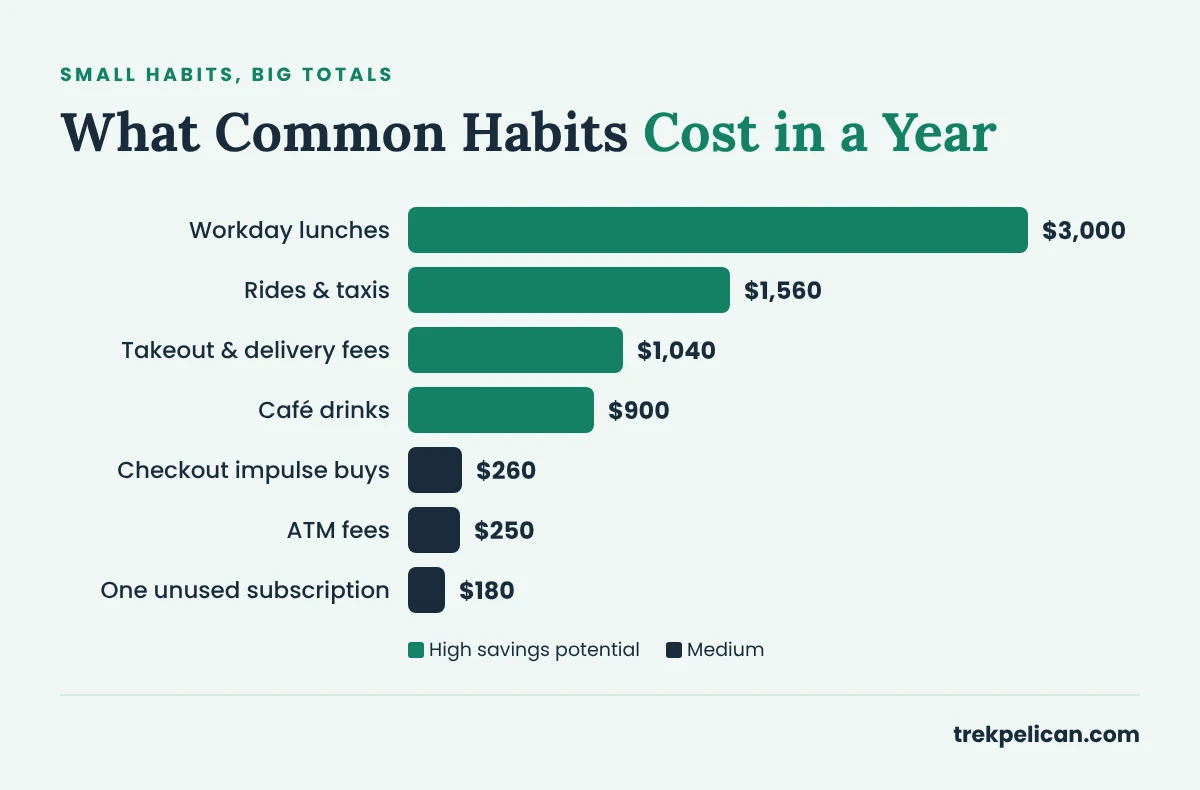
Here’s how the savings potential breaks down by category for a typical habit:
| Category | Example habit | Rough yearly cost | Savings potential |
|---|---|---|---|
| Café drinks | One $3.61 coffee every workday | About $900 | High |
| Workday lunches | A $12 lunch, 5 days a week | About $3,000 | High |
| Subscriptions | One unused $15 plan | About $180 | Medium |
| Rides | Two $15 rides a week | About $1,560 | High |
| Takeout and delivery | About $10 in fees and markups, twice a week | About $1,040 | High |
| ATM fees | One out-of-network withdrawal a week | About $250 | Medium |
| Checkout impulse buys | $5 a week | About $260 | Medium |
You don’t have to stop all of these to see a difference. Cutting back on even one high-potential habit can save more than cutting ten small ones.
Use the calculator below to estimate what your own “stop buying” list could save:
Stop Buying Savings Calculator
Set roughly what you spend each month, tick the habits you’ll cut and choose how much you’ll cut them.
Estimates only, before any interest. Move what you save into a savings account so it doesn’t get spent elsewhere.
How to Make Your Own “Stop Buying” List
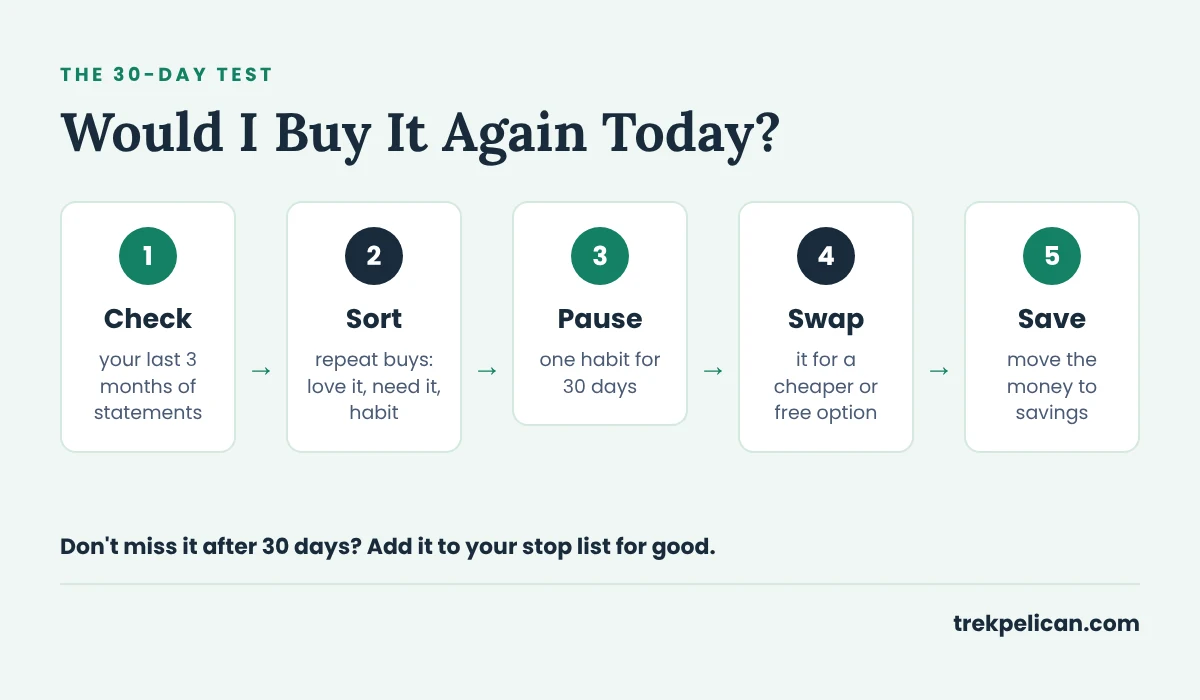
Everyone’s list will look different. Here’s the simple process I used:
1. Check your last three months of statements. Highlight anything you bought more than twice.
2. Sort the repeats. Split them into “love it,” “need it” and “just a habit.”
3. Pause one habit for 30 days. Pick the most expensive “just a habit” item and stop buying it for a month.
4. Find a swap. Replace it with a cheaper or free option so you don’t feel deprived.
5. Move the savings. Transfer the money you would have spent into a savings account so it doesn’t disappear into other spending.
For more habit-based ideas, read my list of 45 frugal living tips to save money every month.
Free and Paid Tools to Help You Stick to It
Writing your list down makes it much easier to follow. I made two printables to help:
FREE: “Stop Buying” Challenge Checklist
A fillable checklist of all 43 items, a 30-day no-buy tracker, a swap planner and a savings tally so you can see your progress. Free to download.
Download the free checklist →No-Spend & Spending Audit Planner
Find your money leaks and plug them for good: a 3-month spending audit, a subscription tracker, a 12-month no-spend calendar, cost-per-use worksheets, a 30-day wish list and monthly reviews.
Get the No-Spend Planner →Helpful Books for Spending Less
If you want to go deeper, these books changed how I think about money and stuff:
• Your Money or Your Life [Amazon link] by Vicki Robin: a classic on matching your spending with what really matters to you.
• The Year of Less [Amazon link] by Cait Flanders: an honest story about a year-long shopping ban and what it taught her.
• The Simple Path to Wealth [Amazon link] by JL Collins: a clear, calm guide to what to do with the money you save.
Frequently Asked Questions
What should I stop buying first to save money?
Start with things you buy often, like café drinks, daily lunches, takeout and rides. Repeat purchases add up faster than one-off splurges, so they usually give you the biggest savings for the least effort.
Do small savings really add up?
Yes. A $5 daily habit costs about $1,800 a year. Cutting a few small habits can easily free up $100 or more a month.
How do I stop impulse buying?
Shop with a list, unsubscribe from store emails and use a 30-day wait rule for non-essentials. If you still want the item after 30 days and it fits your budget, buy it without guilt.
What should you never cheap out on?
Most people find it’s worth spending on health, good food, safety and items you use every day, like shoes, a mattress or work tools. Cheap versions of these often cost more in the long run.
Is frugal living the same as being cheap?
No. Being cheap is about spending as little as possible, even when it hurts your health or relationships. Frugal living is about cutting what doesn’t matter so you can spend on what does.
How do I avoid feeling deprived when I cut back?
Cut one thing at a time, find a swap you enjoy and keep a small “fun money” budget. Feeling deprived usually means you cut too much too fast.
Final Thoughts: Spend on What Actually Matters
Looking back, most of the things I stopped buying didn’t make my life better. They were habits, shortcuts or things I bought because someone else had them. Once I let them go, I barely noticed they were gone.
I still spend money on things I enjoy. The difference is that now I choose them on purpose. Start with one habit this week, see how it feels and build from there.
Want more ideas? Follow Trek Pelican on Pinterest for more frugal living and budgeting tips.
Sources
• U.S. Bureau of Labor Statistics – Consumer Expenditures, 2025
• Fortune / Associated Press – Coffee prices and Toast menu price data (February 2026)
• The Motley Fool – C+R Research survey on subscription spending
• Bankrate – 2025 Checking Account and ATM Fee Study
• Federal Trade Commission – Generic drugs
• U.S. Food and Drug Administration – Generic Drugs: Questions & Answers