
How to Recover Financially After the Holidays: A January Reset Plan
Last Updated: November 18, 2026
This post may contain affiliate links. If you buy through them, I may earn a small commission at no extra cost to you. Read our full affiliate disclosure
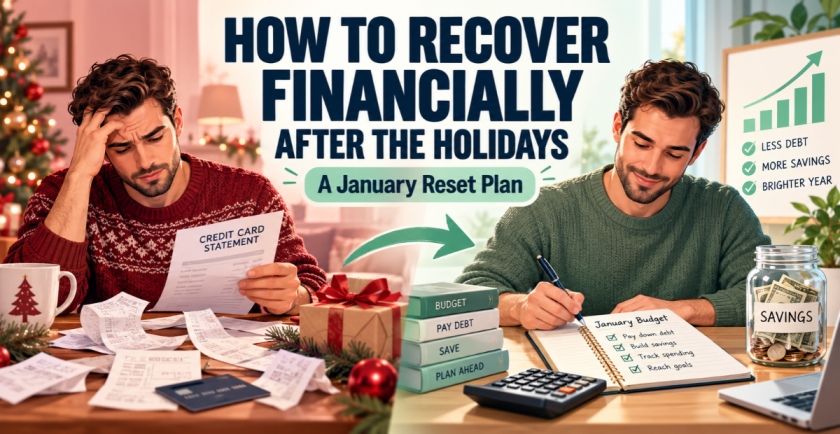
January has a very specific feeling. The lights come down, the gift wrap is in the trash, and then the statements arrive. You open your banking app, look at the number, and your stomach drops a little.
If that is where you are right now, I want you to know two things. First, you are far from alone.
Second, this is fixable, usually faster than it feels at the start, if you stop guessing and follow a plan.
I have been in exactly that spot. The first time I had a credit card, I let it do all my thinking during the holiday sales, and I paid for it the next month in a way I still remember. In this guide I will share what happened, the exact steps I used to climb back, and a complete January reset plan you can start today.
Quick Look: The Post-Holiday Money Problem Is Common
Holiday overspending is not a personal failure. It is one of the most predictable money patterns of the year. LendingTree’s most recent holiday debt survey found that 37% of U.S. consumers took on holiday debt in the 2025 season, with an average balance of about $1,223, the highest level since 2022.
The same survey found that around 41% of people were still paying off debt from the previous holiday season, and 63% of borrowers expected repayment to take three months or longer. That is the real danger: one expensive December quietly rolls into the next one.
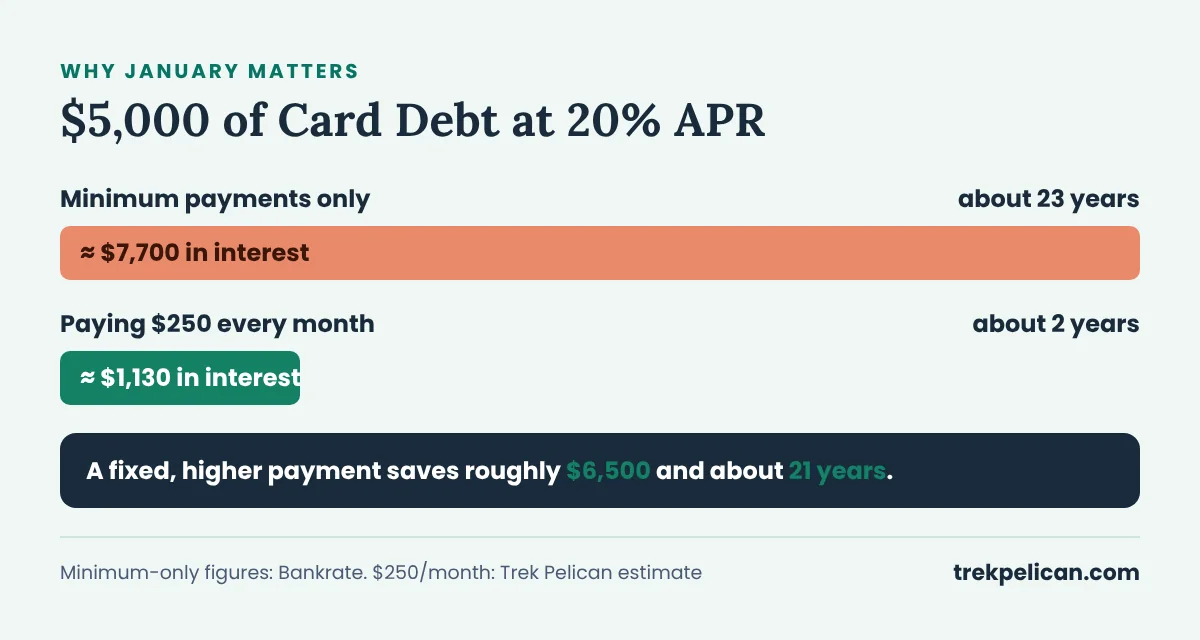
Interest makes it worse. Bankrate’s weekly tracking put the average credit card rate at roughly 19.6% in the fall of 2026. Bankrate’s own example shows that a $5,000 balance at 20% APR, paid only at the minimum, would take about 23 years to clear and cost roughly $7,700 in interest. That is why January is the month to act, not the month to wait.
The short version of this guide: Freeze new spending, face the exact number, write a one-month survival budget, cut hard for a few weeks, pay more than the minimum, add a temporary income stream, and then build a holiday fund so next year never feels like this again.
My Story: The Holiday My Credit Card Did the Thinking
When I got my first credit card, I felt grown-up and a little powerful. Then the holiday season arrived, and every app and store was shouting about offers, discounts and cashback. To me, cashback sounded like free money. Every purchase felt like a smart deal.
Here is what I did not understand back then. Most experts suggest keeping your credit utilization below 30% of your limit. By the time the season was over, I had used about 70% of my limit. I had no idea I was that deep until it was already done.
Why the calculation never happens while you shop
When you have a certain amount available on a card, the math switches off in your head. You see something you like, you buy it, and you feel fine because the card still works. Nobody adds up a running total while they are excited about a deal.
For me, the reality arrived after everything was over. I started checking my messages: this amount debited, that amount debited, then the remaining limit. I sat there adding it all up, and honestly, it was a shock. That is the moment the real calculation started, along with one scary question: how am I going to manage next month?
The month I paid for it
The answer was sacrifice. I had to give up things I had been doing comfortably before. My earnings back then were nowhere near what they are today, so there was no cushion and no easy way out.
I sat down with a plain notebook and planned the next month line by line: what I must pay, what I must not do, and where every bit of money would go. I cancelled subscriptions. I stopped all shopping. At the market, if vegetables were priced high that week, I skipped them.
Salads were out. Fruits were out, because of the price. I ate simple, filling food just to get through the month.
It may sound a little funny reading it now, but that was the cost of my mistake, and I accepted it. If a place was within walking distance, I walked instead of taking my bike, just so I could skip filling fuel. Small savings, but they added up.
How I climbed back
The cutting alone would not have been enough. What actually saved me was extra income. I was already working on blogging and my Facebook pages, so I pushed harder on both. The earnings from those side projects in the following month helped me clear what I owed and get back to normal.
That experience changed how I treat every holiday since. I now save a small amount every single month into a separate holiday and emergency pot. Before the season starts, I estimate roughly how much that month is likely to cost, plan what I will actually buy, and stay inside that number.
The offers still come. I just do not let them make my decisions anymore.
So everything below comes from two places: what I actually did, and what the research says works. You do not need to repeat my worst month to get the lesson.
Why Holiday Overspending Happens to Smart People
Understanding the trap makes it much easier to avoid next time. Overspending is rarely about one huge purchase. It is usually dozens of small “good deals” that nobody totals.
• Cashback and reward offers feel like savings. Getting 5% back on something you did not need is still spending 95% more than you planned.
• Cards remove the pain of paying. With cash, you watch your wallet get thinner. With a card, nothing visible changes until the statement arrives.
• Nobody tracks a running total. Each purchase seems reasonable alone. The problem only appears when you add them up, which most of us do in January.
• Social and family pressure. Gifts, gatherings, travel and hosting all feel non-negotiable in the moment.
• Sales are designed to create urgency. Countdown timers and “only today” deals push you to decide before you think.
Once you see these patterns, you can plan around them. That is exactly what the reset plan does.
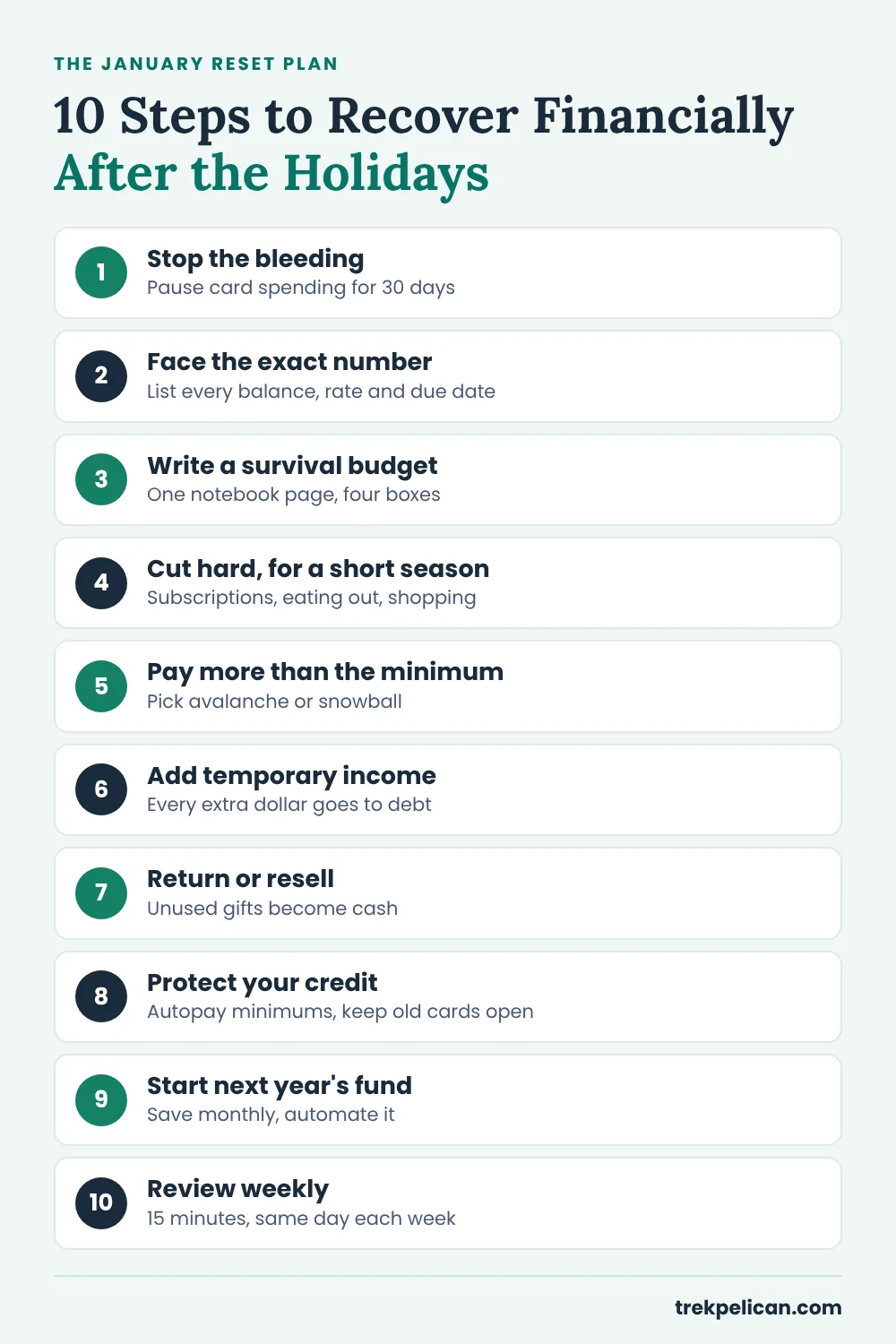
The January Reset Plan: 10 Steps to Recover Financially After the Holidays
Work through these steps in order. The first three take a single evening. The rest play out over the next four to twelve weeks, depending on how much you owe.
Step 1: Stop the bleeding (freeze new card spending)
You cannot empty a bathtub while the tap is still running. For the next 30 days, stop using your credit cards for anything except true emergencies. Move everyday spending to a debit card or cash so every purchase comes out of money you actually have.
If you are tempted, make it harder on yourself. Remove saved cards from shopping apps and browsers, unsubscribe from sale emails, and turn off shopping app notifications. Most card apps also let you lock the card temporarily with one tap.
Step 2: Face the exact number
This was the hardest moment for me, and it is the most important. Write down every balance you owe: each credit card, any store card, any buy now, pay later plan, and any money borrowed from friends or family. Next to each one, note the interest rate, the minimum payment and the due date.
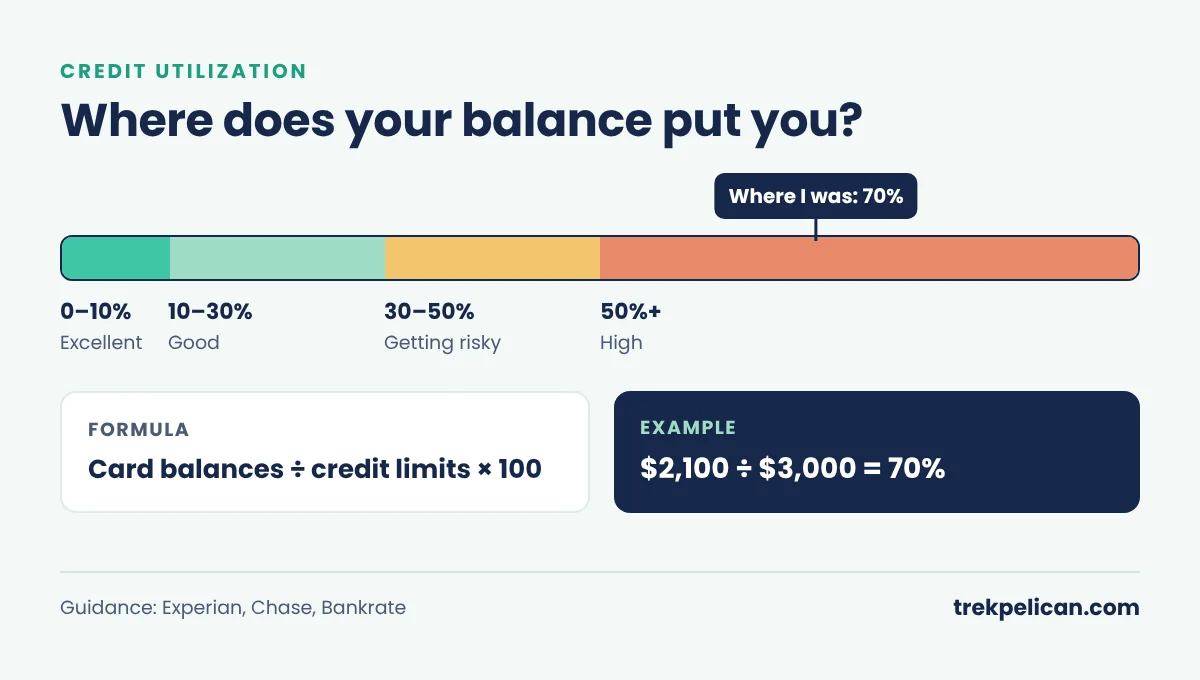
Then calculate your credit utilization. Add up your card balances, divide by your total credit limits, and multiply by 100. If you owe $2,100 on cards with a combined $3,000 limit, your utilization is 70%, exactly where I was.
Credit utilization matters because “amounts owed” makes up about 30% of a FICO score. The common guidance is to stay below 30%, and people with the highest scores tend to keep it under 10%. A high number does not ruin anything permanently, because it is based on your current balances. Pay them down and the number recovers.
Step 3: Write a one-month survival budget (paper works)
You do not need a fancy app. I used a basic notebook, and it worked because I could see everything on one page. Split your page into four parts:
1. Money coming in this month: salary, side income, anything certain. Do not include money you only hope to receive.
2. Must-pay bills: rent or mortgage, utilities, insurance, transport to work and the minimum payments on your debts.
3. Basic survival spending: simple groceries and essentials only.
4. Everything left over: every dollar here goes to extra debt payments.
Write a short “not this month” list too. Mine included shopping, eating out, subscriptions and anything I could walk to instead of ride. Seeing the list in writing makes it much easier to say no in the moment.
Step 4: Cut hard, but only for a short season
Think of this as a sprint, not a new way of life forever. Short, strict cuts are easier to stick to than vague promises to “spend less.” Here are the cuts that helped me most, plus others that work well for many people:
• Cancel or pause subscriptions. Streaming, apps, memberships and boxes add up fast. Most can be restarted later with one click.
• Shop groceries by price, not by habit. If something is expensive this week, skip it or swap it. Build meals around cheap staples like rice, beans, lentils, pasta, oats, potatoes and seasonal produce.
• Cook at home and pack lunches. This is often the single biggest everyday saving.
• Walk when you can. Skipping short drives saves fuel, parking and wear on your vehicle.
• Do a no-spend weekend. Use free local parks, libraries, walks and home movie nights.
• Use what you already have. Before buying anything, check your pantry, closet and storage. Many of us own enough to coast for a month.
• Call your providers. Ask your phone, internet or insurance company about cheaper plans or loyalty discounts.
• Delay every non-urgent purchase by 30 days. Write it on a list. Most of those wants fade on their own.
Yes, some of these cuts feel uncomfortable. I skipped fruit and salads for a month, which is not fun. But every cut buys you speed, and speed is what saves you interest.
Want to see what your own cuts could add up to? Move the sliders below to match a normal month for you.
How long it takes to clear a card balance at 20% APR with a fixed monthly payment and no new charges.
| Balance | Pay $100 / month | Pay $200 / month | Pay $300 / month |
|---|---|---|---|
| $1,000 | 1 yr $103 interest | 6 mo $53 interest | 4 mo $38 interest |
| $2,500 | 2 yr 9 mo $761 interest | 1 yr 3 mo $327 interest | 10 mo $214 interest |
| $5,000 | 9 yr 1 mo $5,840 interest | 2 yr 9 mo $1,522 interest | 1 yr 8 mo $907 interest |
Estimates assume a 20% APR, interest charged monthly and no new purchases. Your card’s exact numbers may differ slightly. Paying more each month cuts both the time and the interest.
Step 5: Pay more than the minimum (and pick a method)
Minimum payments are designed to keep you paying for a very long time. Once your survival budget is set, send every leftover dollar to your debts. The Consumer Financial Protection Bureau describes two simple strategies for paying off more than one balance.
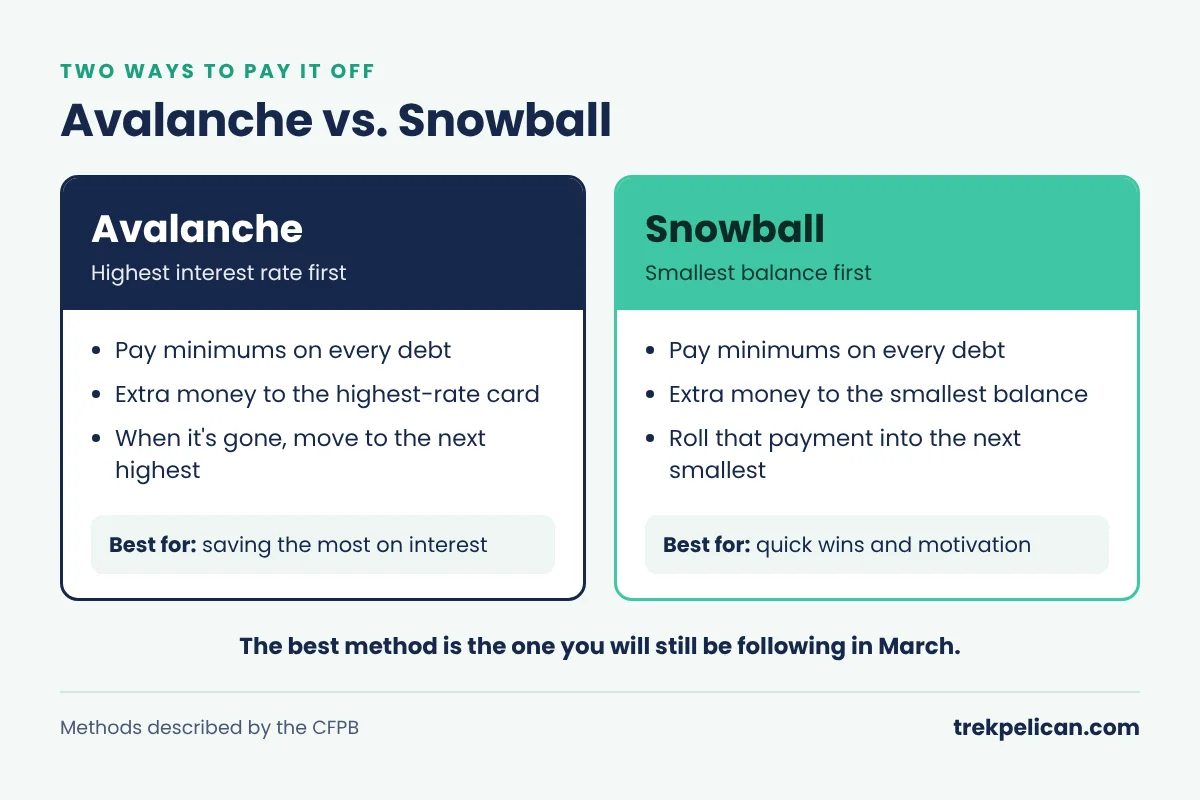
The avalanche method: pay minimums on everything, then put all extra money toward the debt with the highest interest rate. When it is gone, move to the next highest. This saves the most money on interest.
The snowball method: pay minimums on everything, then put all extra money toward the smallest balance first. When it is gone, roll that payment into the next smallest. This gives you quick wins, which helps many people stay motivated.
Both work if you stick with them. If you love the math, choose avalanche. If you need to see progress to keep going, choose snowball. The best method is the one you will still be following in March.
Use the calculator below to check your credit utilization and see how much faster a fixed monthly payment clears your balance compared with paying only the minimum.
January Cut-Back Calculator
Set what you spend in a normal month, pick how hard you will cut, and see the cash you free up for debt.
Send every freed dollar straight to your highest-priority debt.
About balance transfers: A 0% balance transfer card can buy you time on high-interest debt, but read the details first. Most charge a transfer fee, the 0% period ends, and the trick only works if you stop adding new charges. Treat it as a tool to pay faster, never as room to spend more.
Step 6: Add a temporary income stream
This is the step that truly turned things around for me. Cutting expenses has a limit, because you can only skip so many meals and subscriptions. Extra income has a much higher ceiling, and even a few hundred dollars a month speeds up recovery dramatically.
My extra income came from blogging and Facebook pages, which I was already building. If you are starting from zero, here are realistic options, from fastest to longer-term:
• Food and grocery delivery (for example DoorDash, Uber Eats or Instacart). Flexible hours and quick to start in many areas. Track fuel and vehicle costs so you know what you actually earn.
• Rideshare driving (Uber or Lyft), if you have a suitable vehicle and meet the requirements.
• Pet sitting and dog walking through apps like Rover, or neighbors who know you.
• Selling unused items on Facebook Marketplace or eBay, including gifts you will never use.
• Tutoring or teaching a skill online or locally.
• Freelancing in writing, design, editing, admin or social media help on platforms like Upwork or Fiverr.
• Seasonal and weekend shifts in retail, warehouses or events, which often need extra help after the holidays for returns and inventory.
• Blogging and Pinterest, which is slower to start but can grow into real income over time. I explain how I did it in how to make $100 a day blogging and how to grow on Pinterest.
Keep your expectations realistic. Bankrate’s 2025 side hustle survey found the median side hustler earns around $200 a month. That might not sound like much, but $200 a month sent straight to a credit card is $600 off your balance in a single quarter, plus the interest you no longer pay.
One rule I follow: every dollar from the side income goes straight to debt until the balance is gone. It never touches your everyday spending money. That keeps the extra work meaningful.
Step 7: Return, resell or exchange what you do not need
Go through what you bought and what you received. Many stores extend their return windows over the holidays, so check receipts and order histories now before those windows close.
Anything you cannot return, consider selling. Unused gifts, duplicate gadgets and clothes with tags still on them can turn back into cash quickly. Use that money for debt, not for replacing what you sold.
Step 8: Protect your credit while you recover
Recovering your finances also means protecting your credit score from extra damage. A few habits make a big difference:
• Never miss a payment. Payment history is the largest part of most credit scores. Set up automatic payments for at least the minimum on every account.
• Do not close old cards in a panic. Closing a card reduces your total available credit, which can push your utilization higher.
• Pay before the statement date if you can. Card issuers usually report balances around the end of each billing cycle, so a payment made earlier can lower the balance that gets reported.
• Avoid opening new credit just for a deal. January is a time to shrink balances, not add accounts.
• Check your credit reports. In the U.S. you can get free reports from all three bureaus at AnnualCreditReport.com and confirm everything listed is accurate.
If you feel completely stuck, a nonprofit credit counselor can help you build a plan and sometimes arrange lower interest rates. The National Foundation for Credit Counseling (NFCC) is a good starting point. Asking for help early is much better than waiting until payments are missed.
Step 9: Start next year’s holiday fund now
This is the habit that ended my holiday overspending for good. Instead of finding all the holiday money in December, I spread it across the whole year. It is a simple idea often called a sinking fund.
Here is how I do it:
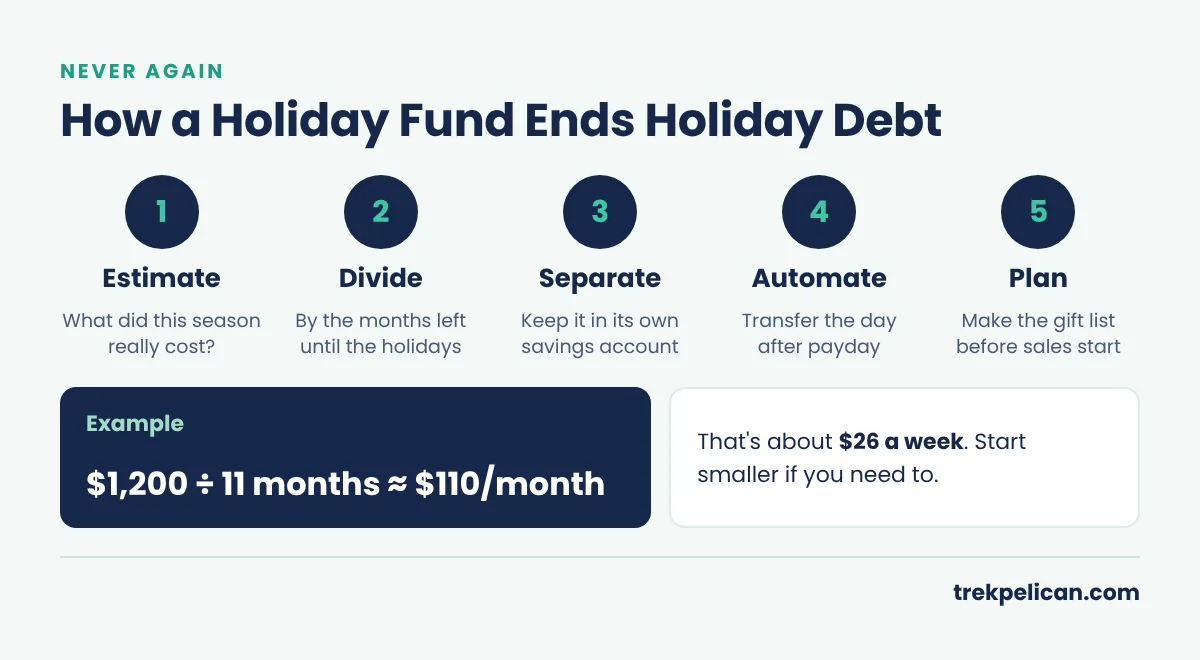
1. Estimate your holiday cost. Look back at what this season actually cost you, including gifts, food, travel, decor and events. That is your realistic target.
2. Divide by the months left. If your target is $1,200 and you start in February, that is about $110 a month for 11 months.
3. Use a separate account. Keep it apart from your everyday checking so you do not dip into it by accident. A separate savings account works well.
4. Automate it. Set a transfer for the day after payday, so the money moves before you can spend it.
5. Plan purchases before the sales start. Make your gift list and budget in October, so the offers become a way to save on things you already planned, not a reason to buy more.
If even $110 feels like too much right now, start smaller. Ten or twenty dollars a month is still better than putting the whole season on a card. You can raise the amount once your debt is gone.
Plug your own numbers into this calculator to find your monthly target:
Holiday Fund Calculator
Find out how much to set aside so next season is paid for before it starts.
Keep it in a separate savings account and automate the transfer for the day after payday.
Step 10: Review every week until you are clear
Pick one day a week, the same day each time, and spend 15 minutes checking in. Update your balances, look at what you spent, and adjust next week's plan. Watching the balance drop each week is surprisingly motivating.
Celebrate milestones without spending money. Cross out each paid-off card in your notebook, mark progress on a tracker, or treat yourself to a free day out. Recovery is a series of small wins, and each one deserves notice.
Your 4-Week January Reset Calendar
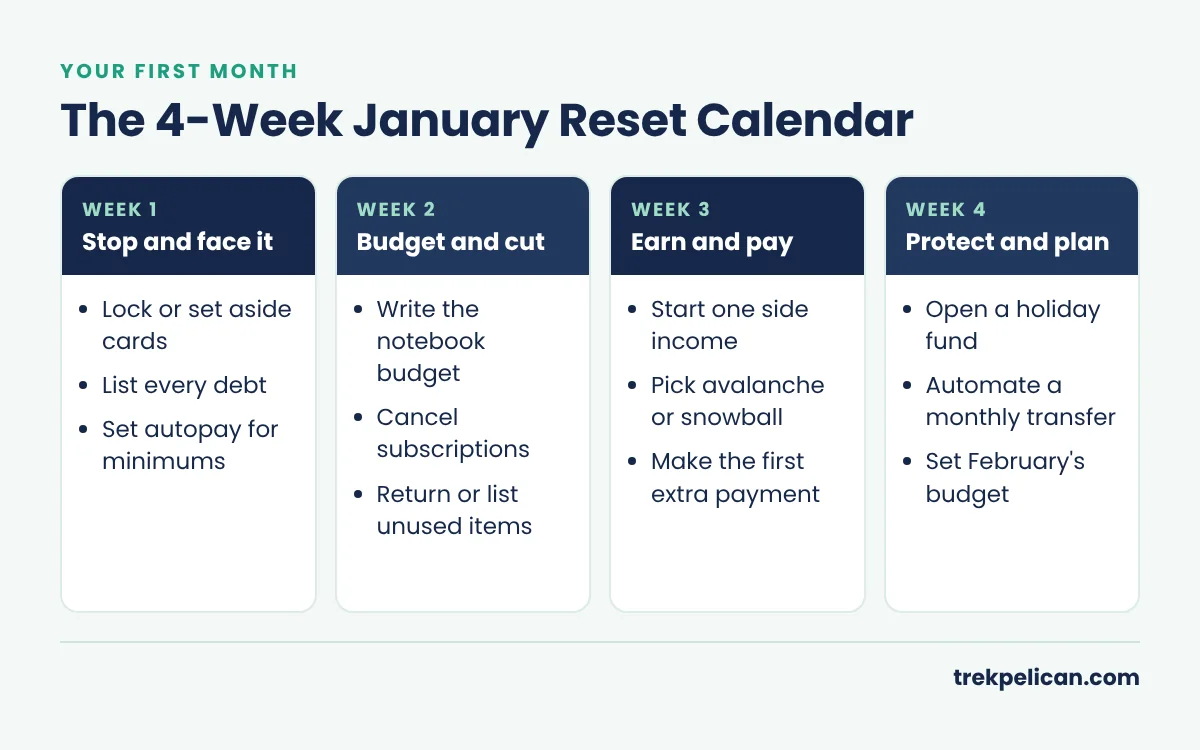
If you like a clear schedule, here is how the first month can look in practice:
| Week | Focus | Key actions |
|---|---|---|
| Week 1 | Stop and face it | Lock or set aside cards, list every debt with rates and due dates, calculate utilization, set up autopay for minimums. |
| Week 2 | Budget and cut | Write the notebook budget, cancel subscriptions, plan cheap meals, return or list unwanted items. |
| Week 3 | Earn and pay | Start one side income option, choose avalanche or snowball, make your first extra payment. |
| Week 4 | Protect and plan | Open a holiday fund, automate a small monthly transfer, review progress and set February's budget. |
Most people will not be fully debt-free after four weeks, and that is fine. The goal of January is to stop the damage, build momentum and set up the system. February and March finish the job.
Mistakes to Avoid While You Recover
• Paying only the minimum. It feels manageable, but interest keeps the balance alive for months or years.
• Using the "I've been good" reward. One small shopping trip after two strict weeks can undo a lot of progress. Choose free rewards until you are clear.
• Hiding the problem. Not looking at statements does not make them smaller. Facing the number is what changed everything for me.
• Cutting so hard you quit. Strict is good, but impossible is not. Keep one small, cheap comfort so you can stay consistent.
• Spending side-income money. Extra earnings only help if they go straight to debt.
• Forgetting about next year. If you do not start a holiday fund, the same January can repeat. Many people are still paying off the previous season when the next one arrives.
What I Do Differently Every Holiday Season Now
Since that first expensive season, my approach has completely changed. I still enjoy the holidays, and I still use offers when they make sense. The difference is that I decide in advance.
• I save into a holiday and emergency pot every month, all year.
• Before the season, I estimate roughly what that month will cost and set a firm number.
• I make a list of what I actually plan to buy, then use sales only for those items.
• I check my card balance during the season, not after it ends.
• I treat cashback as a small bonus, never as a reason to buy.
Planning ahead takes the stress out of the season. January stops being a scary month and becomes just another month.
Free and Paid Tools to Make Your Reset Easier
To make this plan easier to follow, I put together two resources.
FREE: January Money Reset 30-Day Tracker
A printable tracker with a debt list, a one-page survival budget, a no-spend checklist and a 30-day progress log. Free to download, no signup needed.
Download the free tracker →Holiday-Proof Money Planner
A complete printable workbook for your recovery and next year's holidays: avalanche and snowball payoff worksheets, a 12-month holiday sinking fund tracker, a gift budget planner, a seasonal spending estimate sheet and a side income log.
Get the Holiday-Proof Money Planner →Helpful Books and Tools for Your Money Reset
If you want to go deeper, these books and simple tools help many people rethink spending and stay on track:
• The Total Money Makeover by Dave Ramsey – a step-by-step plan built around the debt snowball. Check price
• The Psychology of Money by Morgan Housel – short, readable lessons on why we spend the way we do. Check price
• I Will Teach You to Be Rich by Ramit Sethi – practical systems for automating savings and spending guilt-free on what matters. Check price
• Your Money or Your Life by Vicki Robin – a classic on measuring spending against the hours of life it costs. Check price
• An undated budget planner notebook – a simple paper planner, the same way I tracked my recovery month. Check price
• A cash envelope wallet – helpful if you want to switch everyday spending to cash for a while. Check price
Frequently Asked Questions
How long does it take to recover financially after the holidays?
It depends on how much you owe and how much extra you can pay. Smaller balances can often be cleared in one to three months with strict cutting and a side income. LendingTree found that most holiday borrowers expect it to take three months or longer, so a 90-day plan is a realistic goal for many people.
Should I use my savings to pay off holiday credit card debt?
If you have savings beyond a basic emergency cushion, using part of it to clear high-interest card debt often makes sense, because card interest usually costs far more than savings earn. Try to keep a small emergency fund so a surprise expense does not push you straight back onto the card.
Is it bad to have high credit utilization after the holidays?
High utilization can lower your credit score temporarily, but utilization is based on your current balances. As you pay down debt, your score usually recovers. The key is to bring balances down steadily and never miss a payment.
Which is better, the debt avalanche or the debt snowball?
The avalanche method saves more on interest because it targets the highest rate first. The snowball method gives faster wins by clearing the smallest balance first. Choose the one you will actually stick with.
How can I avoid holiday debt next year?
Start a holiday sinking fund in January or February, automate a small monthly transfer, estimate your total season cost in advance and make your gift list before the sales begin. That way you shop with money you already have.
What is the fastest way to make extra money in January?
Selling unused items, food delivery, rideshare driving, pet sitting and seasonal shifts are usually the quickest to start. Freelancing and blogging take longer but can grow into steadier income over time.
Final Thoughts: January Is a Reset, Not a Punishment
Looking back, that tough month after my first credit card holiday taught me more about money than any book. It was uncomfortable, but it showed me where my habits were weak and gave me a system I still use today.
If you are staring at holiday bills right now, my advice is simple: do what I did after overspending on that card. Face the number, write the plan, cut hard for a short time, and add a part-time income so you recover faster. Then start saving for next year so this January is the last one that feels like this.
You do not have to fix everything today. Just take the first step tonight, and keep going one week at a time.
For more frugal living, budgeting and side income ideas, follow Trek Pelican on Pinterest so you do not miss the next post.
Sources
• Wharton Baker Retail Center – Holiday Debt Hits $1,223 (LendingTree survey)
• Waco Tribune-Herald – LendingTree holiday debt survey details
• Bankrate – Current credit card interest rates
• Bankrate – Credit card interest rate forecast for 2026
• Chase – How credit utilization affects your credit score
• Bankrate – Credit utilization ratio
• Capital One – Credit card payoff strategies (CFPB avalanche and snowball)