
How to Cut Your Grocery Bill in Half (Without Eating Less)

This post may contain affiliate links. If you buy through them, I may earn a small commission at no extra cost to you. Read our full affiliate disclosure
Have you ever walked out of a grocery store feeling fine, then unpacked the bags at home and thought, “Why did I buy all this?” That was me, almost every week, when I first started cooking for myself.
In the store, nothing felt like too much. A few extra vegetables, a snack, another pack of something on offer. At home, the counter told a different story. And a few days later, some of those vegetables went straight into the bin.
Cutting your grocery bill in half sounds dramatic, but it usually doesn’t come from one big trick.
It comes from fixing a handful of leaks: buying more than you cook, throwing food away, paying for brand names and shopping without a plan.
In this guide, I’ll share how I fixed mine and the research-backed steps that can help you get close to half.
Quick Look: Where Your Grocery Money Goes
Here are a few numbers that show how much room most households have to save:
• Food waste is huge. A Penn State study published in the American Journal of Agricultural Economics estimated that the average U.S. household wastes about 31.9% of the food it buys, roughly $1,866 a year.
• Store brands cost less. Consumer Reports, citing industry experts, puts the average saving from choosing store brands at about 25%.
• Eating out is getting pricier faster. In the year to September 2026, the government’s food-at-home price index rose 1.8%, while food away from home rose 3.5%, according to the Bureau of Labor Statistics.
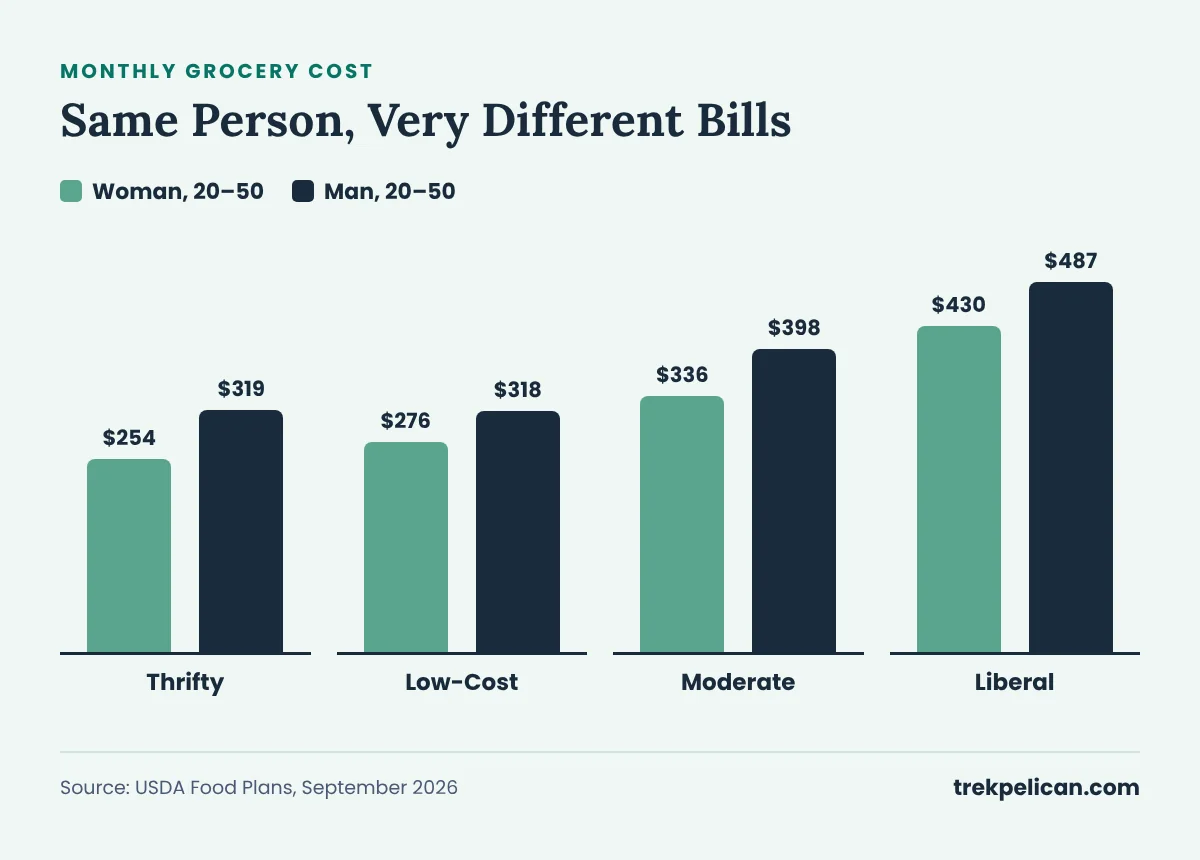
• Your “plan level” matters. USDA’s September 2026 food plans estimate that an adult man aged 20–50 eats on about $319 a month on the Thrifty plan, compared with about $487 on the Liberal plan. That’s a gap of roughly a third for the same person.
Put those together and “half” stops sounding impossible. If roughly a third of your food is wasted and a quarter of your cart could cost less as store brands, there’s a lot of money on the table before you even think about coupons.
The short version: Know your number, plan your meals, buy only what you’ll actually cook, switch to store brands, stock cheap staples, and stop throwing food away. Each step saves a slice. Together they add up.
My Story: The Shopping Bags That Told the Truth
When I started cooking for myself in college, I had no idea how much food one person needs. My family had always handled groceries. So I guessed, and I guessed big.
The strange thing is that overspending never felt like overspending at the store. Each item seemed reasonable. It was only when I got home and saw everything spread out that I realized I’d bought far too much.
Fresh vegetables were the worst part. When you cook for one person, a bunch of greens or a bag of vegetables is a lot. If I didn’t cook them that day or the next, they wilted or spoiled and weren’t usable anymore. I was paying for food and then paying again to replace it.
I don’t like freezing green vegetables, so freezing everything wasn’t my answer. Instead, I slowly learned exactly how much I need. I started cooking only the amount I would eat. If I ever made a little too much, I’d eat it the same day or share it with the stray animals near my place rather than let it go to waste.
Now I shop once a week, and only if I actually need something. I buy for the meals I’ve planned, in the portions I’ll cook. My grocery spending dropped a lot, not because I started eating less, but because I stopped buying food that never reached my plate.
Is Cutting Your Grocery Bill in Half Realistic?
It depends on where you’re starting. If you already plan meals, buy store brands and rarely waste food, half may be a stretch. But if you shop without a list, buy mostly name brands and throw out food every week, you can get close to half.
Think of it as stacking smaller savings. Cutting waste, switching brands, planning meals and buying cheaper staples each take a slice off the bill. You don’t need any single trick to cut 50%.
Here’s a rough example. Say you spend $600 a month on groceries. Recovering half of the food you’d normally waste could save about 15%, bringing you to around $510.
Switching half your cart to store brands could take off another 12% or so, to about $449. Meal planning with a strict list might trim 10%, to about $404. Buying seasonal produce and skipping pre-cut items could save a little more, to roughly $365.
That’s close to 40% off with fairly conservative estimates. Add in cooking more from scratch instead of buying ready meals, and getting near half is realistic for many households. These are estimates, not promises, so treat your own results as the real test.
Use the calculator below to estimate what these habits could save on your own bill:
Grocery Savings Calculator
Enter your monthly grocery spending and tick the habits you’ll start. Savings stack on what’s left after each habit.
Percentages are rough estimates based on typical food waste and store-brand savings. Your results depend on your starting habits.
Step 1: Know Your Real Grocery Number
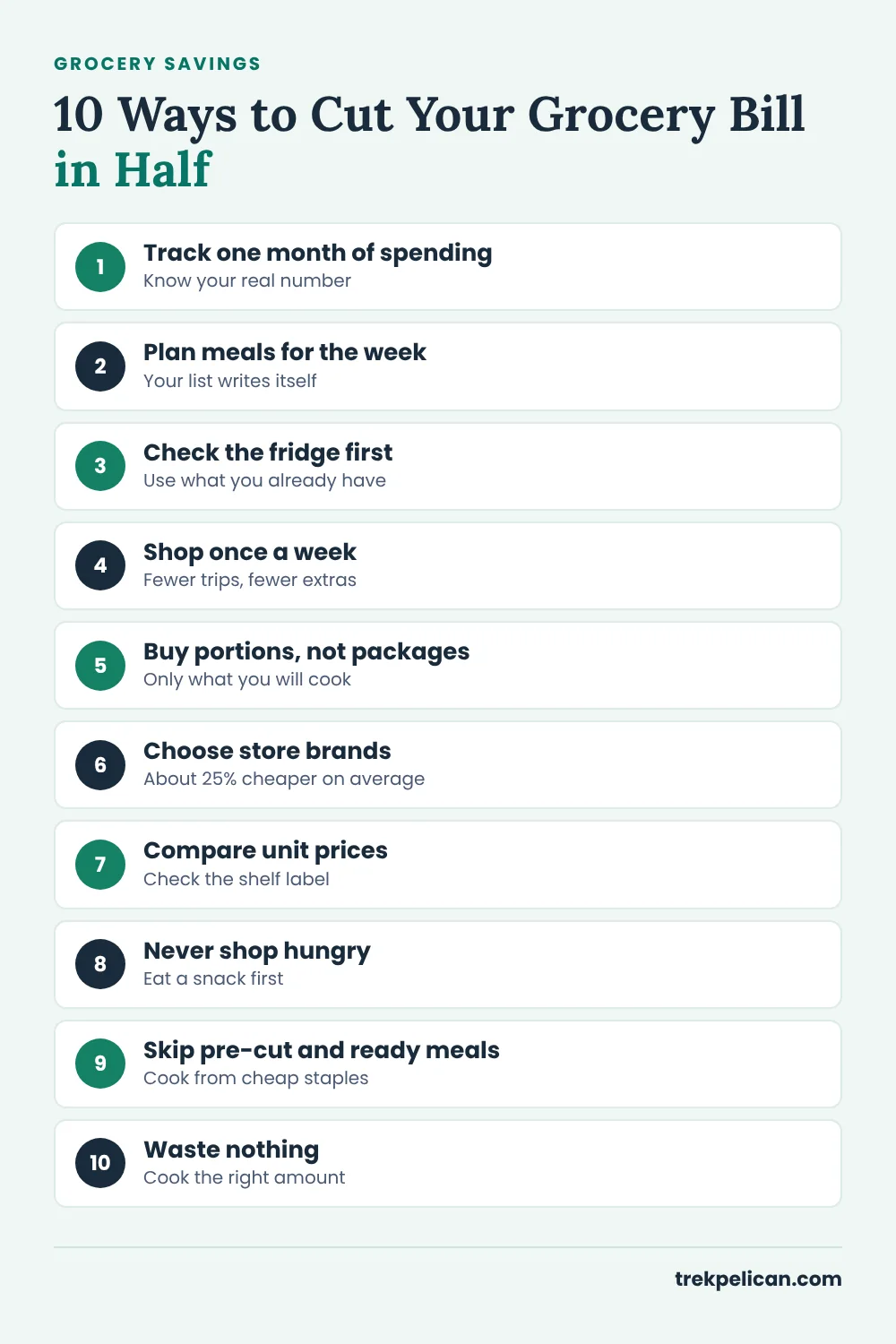
1. Track one month of grocery spending
Before cutting anything, find out what you actually spend. Save every receipt for a month or check your bank statements. Include everything you buy at the grocery store, plus quick top-up trips.
Most people underestimate this number. Those small “I’ll just grab a few things” trips add up fast.
2. Compare it with USDA’s food plans
The USDA publishes monthly food plan costs at four levels: Thrifty, Low-Cost, Moderate-Cost and Liberal. They show what a healthy diet costs at each level for different ages and household sizes.
If you’re spending at or above the Liberal level, there’s real room to save. A realistic target is to move down one or two levels.
3. Set a weekly grocery limit
Divide your monthly target into a weekly number. A weekly limit is easier to manage because you can see straight away if you’re over and adjust next week.
Step 2: Plan Before You Shop
4. Plan your meals for the week
I plan breakfast, lunch and dinner for each day of the week before I shop. Then my grocery list writes itself. Every item has a job, so nothing gets bought “just in case.”
5. Check what you already have
Before writing your list, look in your fridge, freezer and pantry. Plan at least a couple of meals around what you already own. This alone can shave a meal or two off your weekly shop.
6. Write a list and stick to it
Your list is your budget in action. If something isn’t on it, it waits until next week. Group the list by store section so you move quickly and spend less time tempted by end-of-aisle displays.
7. Shop once a week, only if you need to
I shop once a week, and some weeks I skip it if I still have enough. Every extra trip to the store is another chance to buy things you didn’t plan for. Fewer trips usually means a smaller bill.
Step 3: Buy Only What You’ll Actually Cook
This is the step that made the biggest difference for me, and it’s the one most grocery-saving guides skip.
8. Shop for portions, not packages
Think about how many servings each meal needs, then buy for that. If you cook for one or two, a family-size pack of fresh food is often a waste, even if the unit price looks better. A cheaper price per pound doesn’t help if a third of it goes in the bin.
9. Buy loose produce when you can
Loose fruits and vegetables let you pick exactly how many you need. Two onions instead of a three-pound bag, or four carrots instead of a big pack, can stop the slow waste that happens at the back of the fridge.
10. Buy delicate produce for the next few days only
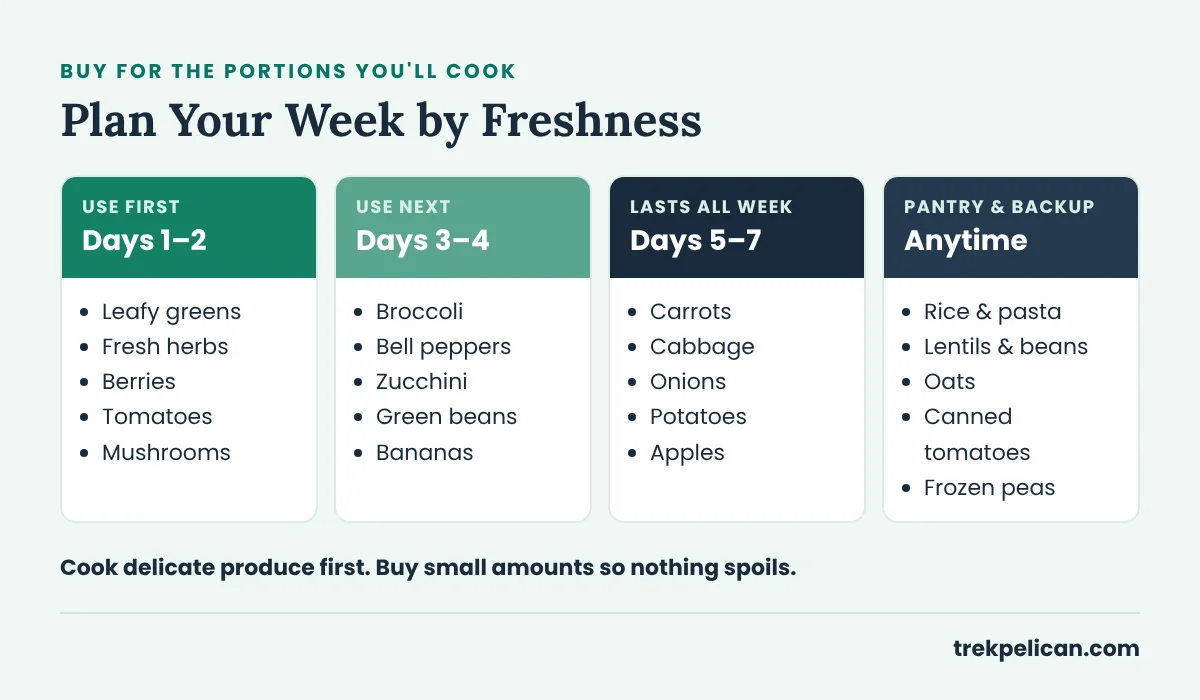
Leafy greens, herbs and soft fruits go bad quickly. Buy them for the first part of the week and plan the meals that use them early. Save sturdier vegetables like carrots, cabbage, onions and potatoes for later in the week.
11. Learn your own amounts
At first, I didn’t know how much one meal for me actually needed. Now I do. Write down what you buy and what you throw away for a few weeks. You’ll quickly see your real quantities, and your list will shrink to match.
Step 4: Shop Smarter in the Store
12. Choose store brands for basics
Store brands are often made to similar standards and cost about a quarter less on average. Start with simple items like rice, flour, oats, canned beans, frozen vegetables, pasta, spices and cleaning supplies. Keep the name brands only where you truly notice a difference.
13. Compare unit prices
The small shelf label usually shows a price per ounce or per pound. Use it to compare sizes and brands. Sometimes the bigger pack is cheaper per unit, and sometimes it isn’t, especially on sale weeks.
14. Look high and low on the shelves
Stores often place pricier products at eye level. Cheaper options and store brands are frequently on the top or bottom shelves. A quick glance up and down can save a dollar or two on each item.
15. Never shop hungry
Shopping on an empty stomach makes everything look tempting. Eat a snack before you go, and you’ll find it much easier to stick to your list.
16. Skip pre-cut and pre-washed when you can
Pre-chopped vegetables, washed salad mixes and individual snack packs cost much more per serving than the whole versions. Spending ten minutes chopping at home can save a surprising amount over a month.
17. Buy what’s in season and swap what’s expensive
Seasonal produce is usually cheaper and tastes better. When something is pricey this week, I simply skip it and buy something else. Flexibility with recipes keeps your bill low.
Step 5: Stock Cheap, Filling Staples
18. Build meals around low-cost staples
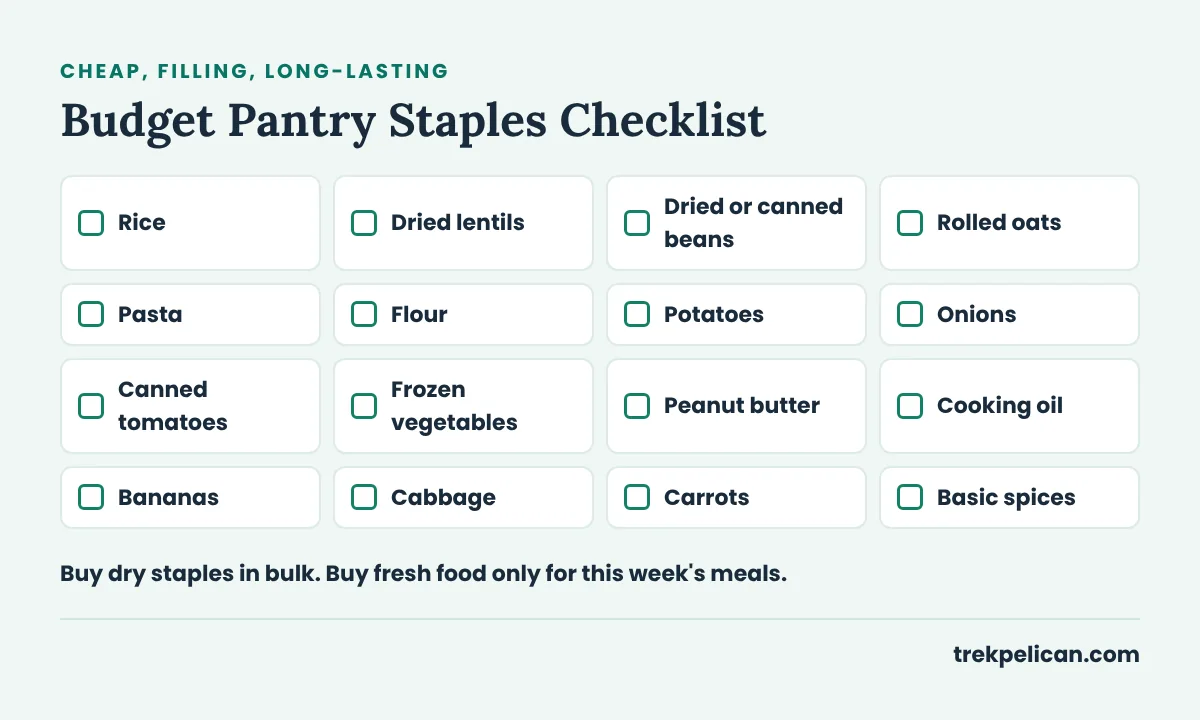
Rice, dried beans, lentils, oats, pasta, potatoes, onions, flour, canned tomatoes and frozen vegetables are some of the cheapest foods per serving. They’re filling, flexible and last a long time.
19. Buy in bulk only what lasts
I buy things like rice, flour, oil and household basics in larger quantities because they keep well and often cost less per unit. But I don’t bulk-buy fresh food. Bulk only saves money if you use it all before it goes bad.
20. Cook from scratch more often
Ready meals and convenience foods carry a big markup. A simple pot of lentil soup, a vegetable stir-fry or a pasta dish made from staples costs a fraction of a ready-made version. And since eating out prices are rising faster than grocery prices, cooking at home saves even more each year.
Sample One-Week Grocery List for One Person
Here’s what a simple, low-waste weekly list can look like when you cook for yourself. It assumes you already have basics like oil, salt and a few spices. Adjust the amounts to your appetite, then keep notes for a few weeks until your list matches what you really eat.
| Section | What to buy | Why it works |
|---|---|---|
| Fresh, use early | 1 small bunch of leafy greens, 1 bunch of herbs, a few tomatoes | Delicate items for the first two or three days |
| Fresh, use later | 3–4 carrots, 1 small cabbage, 4 onions, 4–5 potatoes, a few bananas and apples | Sturdy produce that lasts the whole week |
| Grains | Rice or pasta, a bag of oats, one loaf of bread | Cheap, filling bases for most meals |
| Protein | Dried lentils or a few cans of beans, tofu or paneer, peanut butter | Low-cost protein that keeps well |
| Dairy | Milk, plain yogurt, a small block of cheese | Breakfasts, snacks and quick toppings |
| Frozen (optional) | One bag of mixed vegetables or peas | A backup for the end of the week |
| Pantry top-ups | Canned tomatoes, only when you run low | Base for soups, curries and sauces |
Notice what’s missing: snacks you didn’t plan, ready meals, pre-cut vegetables and family-size packs of fresh food. Those are often the items that push a bill up without adding much to your actual meals.
How I plan portions when cooking for one
I think in meals, not in packs. If I’m making a vegetable dish twice this week, I buy enough vegetables for two meals, not a full bag that would last five. Grains and lentils are measured by the cup, so I know exactly how much one meal needs.
It took me a few months of mistakes to learn this. Writing down what I threw away each week made the pattern clear much faster than guessing.
Step 6: Waste Nothing
21. Cook the right amount
I cook only what I’ll eat. That way there are no forgotten leftovers sitting in the fridge until they spoil. If you’re cooking for a family, measure grains and pasta instead of guessing. It’s easy to make far more rice than anyone will eat.
22. If you do have extra, eat it soon
If I accidentally make too much, I eat it the same day or the next. Plan a “use it up” meal once a week, like a stir-fry, soup or fried rice, where odds and ends go in.
23. Store produce properly
A lot of waste comes from poor storage. Keep leafy greens dry and wrapped in a towel in a container. Store onions and potatoes separately in a cool, dark place. Keep herbs in a glass of water like flowers.
24. Use the “first in, first out” rule
When you unpack groceries, move older items to the front and put new ones behind. You’ll use food before it expires instead of discovering it months later.
Fact Check: Is Freezing Food Bad?
I personally don’t like freezing green vegetables, so I prefer buying smaller amounts fresh. But I wanted to check the facts, because freezing is one of the most common grocery-saving tips. Here’s what the research and food-safety experts say.
The downsides of freezing are real, but mostly about quality
• Texture can change. University of Illinois Extension notes that high-water vegetables such as lettuce, celery, cucumbers and radishes break down when frozen. Slow freezing also forms large ice crystals that can soften food.
• Freezer burn affects quality. North Dakota State University Extension explains that freezer burn is the drying out of frozen food. It’s not a safety problem, but it can make food dry and tasteless.
• Quality fades over time. Food kept at 0°F stays safe, but its quality drops with long storage. Label and date what you freeze, and use the oldest first.
• Some vegetables need blanching first. Home-frozen vegetables usually need a quick blanch in boiling water to keep their color and texture, which is extra work.
But frozen produce is not less nutritious
A UC Davis study, funded by the frozen food industry’s research foundation, compared eight fruits and vegetables. It found that commercially frozen produce was generally equal to, and sometimes better than, fresh produce that had been stored in the fridge for several days.
My take: If you prefer fresh, like I do, the answer isn’t freezing everything. It’s buying smaller amounts and cooking them within a few days. If you’re happy with frozen, store-bought frozen vegetables are a cheap, low-waste option for cooked dishes. Either way, the goal is the same: don’t pay for food you throw away.
Step 7: Use Deals the Smart Way
25. Use your store’s app and digital coupons
Many stores offer digital coupons and loyalty prices in their apps. Check them before you write your list, and plan meals around what’s on sale that week.
26. Only buy deals that are already on your list
I often buy at big stores and online because prices are lower and there are offers. But a deal only saves money if you were going to buy it anyway. A “buy two, get one free” on something you don’t need is just spending more.
27. Try online grocery orders with pickup
Ordering online for pickup lets you see your running total before you pay and removes the temptation of walking past displays. Watch out for fees, and compare prices with the in-store total.
28. Compare a few stores, not ten
Pick two or three stores near you and learn which one is cheapest for your regular items. Driving across town to save a dollar usually costs more in time and fuel than it saves.
Common Grocery Mistakes That Keep Your Bill High
• Buying family-size packs for a small household. A low unit price doesn’t help if half of it spoils.
• Shopping without checking the fridge. You end up buying things you already have.
• Too many small trips. Every “quick” trip adds extras to the bill.
• Bulk-buying fresh food. Bulk is great for rice and flour, not for spinach.
• Chasing deals you don’t need. Discounts on unplanned items are still unplanned spending.
• Cooking too much. Forgotten leftovers are one of the biggest sources of household food waste.
A Simple Weekly Grocery Routine
1. Day before shopping: Check your fridge, freezer and pantry.
2. Plan meals: Use what you have first, then plan around sales and staples.
3. Write the list: Only what your meals need, in the amounts you’ll cook.
4. Shop once: Eat first, stick to the list, check unit prices and choose store brands.
5. Unpack smart: Store produce properly and put older food in front.
6. Cook to plan: Use delicate produce first and make only what you’ll eat.
7. Check in: Compare what you spent with your weekly limit.
Free and Paid Tools to Help You Stick to It
To make this routine easier, I created two printables you can fill in on screen or print.
FREE: Weekly Grocery List & Meal Planner
A fillable one-week planner with a fridge and pantry check, a breakfast, lunch and dinner plan for each day, and a grocery list sorted by store section. Free to download.
Download the free planner →Grocery Budget Planner & Price Book
Everything you need to cut your grocery bill for a whole year: a 52-week grocery spending tracker, a price book to compare stores, a store-brand swap list, a pantry inventory, a “use it first” fridge log, a food waste tracker and 12 weeks of meal plan pages.
Get the Grocery Budget Planner →Helpful Books and Kitchen Tools
• Good and Cheap by Leanne Brown – filling, low-cost recipes built for very tight food budgets. Check price
• The Use-It-All Cookbook by Cinda Chavich – recipes and ideas for using every bit of what you buy. Check price
• Budget Bytes by Beth Moncel – tasty recipes with cost breakdowns, great for learning to cook on a budget. Check price
• Produce saver containers – help leafy greens and berries stay fresh longer in the fridge. Check price
• Reusable mesh produce bags – make buying loose fruits and vegetables easy. Check price
• Digital kitchen scale – measure portions so you cook and buy the right amount. Check price
• Glass food storage containers – keep prepped ingredients fresh and visible. Check price
• Magnetic grocery list pad – add items the moment you run low. Check price
Frequently Asked Questions
Can you really cut your grocery bill in half?
Many people can get close, especially if they currently shop without a plan, buy mostly name brands and waste food regularly. Results depend on your starting point. Stacking several habits, like meal planning, store brands and cutting waste, is how the big savings happen.
What is the fastest way to lower my grocery bill?
Plan your meals and shop with a list. It immediately cuts impulse buys and reduces food waste, which are two of the biggest leaks in most grocery budgets.
How much should one person spend on groceries a month?
USDA’s September 2026 food plans estimate about $254 to $430 a month for a woman aged 20–50 and about $319 to $487 for a man, depending on the plan level. Your number depends on your diet, location and household size.
Are store brands as good as name brands?
Often, yes, especially for simple staples like flour, sugar, rice, canned goods and frozen vegetables. Try one swap at a time and keep the ones you’re happy with.
Is frozen food less healthy than fresh?
Research suggests commercially frozen fruits and vegetables are generally about as nutritious as fresh produce stored in the fridge for a few days. Freezing mainly affects texture, especially for high-water vegetables like lettuce and cucumbers.
How do I stop wasting food when cooking for one?
Buy loose produce in small amounts, plan delicate foods for early in the week, and cook only the portion you’ll eat. Track what you throw away for a few weeks to learn your real quantities.
Final Thoughts: Buy What Reaches Your Plate
When I look back at those overfilled shopping bags, the lesson is simple. I wasn’t spending too much on food. I was spending too much on food I never ate.
Start by knowing your number. Plan your meals, shop once a week, buy only the portions you’ll cook and choose store brands for the basics. Then make sure every item reaches your plate. Do that consistently and cutting your grocery bill in half becomes a realistic goal.
For more ways to save, read my 45 frugal living tips to save money every month. And follow Trek Pelican on Pinterest for more budgeting and frugal living ideas.
Sources
• USDA – Food Plans: Cost of Food Monthly Reports (September 2026)
• U.S. Bureau of Labor Statistics – Consumer Price Index, September 2026
• Futurity – Penn State study on U.S. household food waste
• Consumer Reports – How buying store brands will save you money
• American Frozen Food Institute – UC Davis study on frozen and fresh produce
• University of Illinois Extension – Freezing tips
• North Dakota State University Extension – Freezing food safely