18 Passive Income Ideas That Actually Work (And What Each One Really Takes)

This post may contain affiliate links. If you buy through them, I may earn a small commission at no extra cost to you. Read our full affiliate disclosure
The earnings shown in this post are my own results. Yours will vary with your skill, time, niche and luck, and nothing here is a promise or guarantee of income. Read the earnings disclaimer
Most passive income lists make it sound like you set something up on a Sunday and get paid forever. I believed that for years, and it cost me a lot of wasted months.
Almost every idea on this list needs real work at the start, and many need a little upkeep after that.
What makes income passive is not zero effort. It is that the work and the payment are no longer tied together hour by hour. An article I wrote long ago can still earn ad money today, and a digital product I built once can sell again tomorrow without me rebuilding it.
In this guide I cover 18 passive income ideas. The first five are the ones my own income comes from, so I share my real dashboards, including the small and disappointing numbers. The rest are researched and explained as practical guidance, with the costs, timelines and limits you should know before you start.
What “Passive” Really Means
Every income idea asks you to pay with one of three things: time, money or skill. A blog costs very little money but a lot of time. A dividend fund takes five minutes to buy but needs capital. A digital product needs neither much money nor much time, but it needs marketing skill.
So for each idea below, I list four things:
• Startup cost: what you need to spend to begin.
• Time to first income: a realistic range, not the best case.
• Upkeep: the ongoing work after setup.
• Best for: who the idea suits.
If you only have ten minutes, use the comparison table first and then jump to the ideas that match your budget and schedule.
Quick Comparison of All 18 Ideas
| # | Idea | Startup cost | Time to first income | Upkeep |
|---|---|---|---|---|
| 1 | Niche blog with display ads | Low | 6 to 12 months | Medium |
| 2 | Digital products | Very low | Weeks to months | Low, plus marketing |
| 3 | Facebook content monetization | Free | 3 to 6 months or more | Daily, but short |
| 4 | Affiliate marketing | Free to low | 3 to 6 months | Low |
| 5 | Pinterest evergreen content | Free | 2 to 6 months | Medium |
| 6 | Self-published ebooks | Very low | 1 to 3 months | Low |
| 7 | YouTube channel | Free to low | 6 to 18 months | Medium |
| 8 | Stock photos and video | Low if you own a camera | 1 to 6 months | Low |
| 9 | Canva templates | Very low | Weeks to months | Low |
| 10 | Printable wall art | Very low | Weeks to months | Low |
| 11 | Print on demand | Very low | 1 to 4 months | Low to medium |
| 12 | Online course | Low to medium | 2 to 6 months | Medium |
| 13 | Paid newsletter | Free | 3 to 12 months | High, weekly writing |
| 14 | Membership site | Low | 3 to 12 months | High |
| 15 | Presets and Notion or website templates | Very low | Weeks to months | Low |
| 16 | Renting out gear, storage or parking | Free if you own it | Days to weeks | Low to medium |
| 17 | High-yield savings account | Your savings | First month | None |
| 18 | Dividend funds and REITs | Your capital | First quarter | Very low |
Part 1: The Passive Income Ideas I Earn From
These five are connected. My blog earns from ads, the same articles carry affiliate links, the same audience buys digital products, and Pinterest and Facebook send the readers. I rank them below in the order I find them most passive today.
1. Start a Niche Blog With Display Ads
Blog ad income is the most passive money I earn. Once an article gets steady traffic, it earns every day whether I work or not. It is also the idea that took me the longest to earn a first dollar from, so I want to be clear about both sides.
I started blogging as a student on a free platform and spent years making mistakes before the income became meaningful. The model itself is simple. You write helpful articles in one niche, bring readers through search or Pinterest, and an ad network pays you for every thousand visits.
Here is what that looks like on one of my sites. In October 2026 it earned a little over $3,200 from about 163,000 visits, which works out to roughly $20 for every 1,000 visits. Daily earnings started the month near $50 and ended near $160, and I did not work three times harder to get there. The older articles and pins simply kept gaining traffic.

Please read that number with the years behind it in mind. For a long time my blog earned almost nothing, and a month like this came only after I fixed my audience, my traffic source and my ad setup.
• Startup cost: a domain and hosting, usually a few dollars a month.
• Time to first income: 6 to 12 months for most beginners.
• Upkeep: new articles, plus updating old ones a few times a year.
• Best for: patient people who like writing and can wait for results.
What you earn depends heavily on two things: how many readers you get and where they live. Advertisers pay far more to reach readers in the United States, Canada, the United Kingdom and Australia than in most other countries. I explain how I improved that number in how to increase ad RPM on your blog.
If you want to start, my step-by-step setup is in how to start a WordPress blog on Hostinger. You can also use my Hostinger referral link with code BKXHEMANTLXU for 20% off. For the income side, read how to make $100 a day blogging and my blog income report.
2. Create and Sell Digital Products
Digital products come second for me. My first one was a wedding planning kit, a bundle of planning guides, checklists and a budget tracker. You build the files once, and each sale after that is delivered automatically by the platform.
Creating the product is the easy half now. AI tools such as ChatGPT, Claude and Google Gemini can help you outline, draft and polish a planner or guide in days instead of weeks, and Canva handles the design. The hard half is marketing, and this is where most beginners lose money.
I sell in two different ways, and they teach two different lessons.
Paid ads to a payment page. My wedding planning kit is made for buyers in India, so I sell it through SuperProfile and send traffic with Facebook ads. The screenshot below shows 42 sales across my payment pages, 25 of them from the wedding kit.
The dashboard is in Indian rupees. Converted at the current exchange rate, total revenue is just under $100, and about $65 of that came from the kit, which sells for about $2. The ad spend comes out of it before any profit.

That is the lesson of paid ads. If you run them without understanding your audience, your offer and your numbers, the ad money is gone and the sales do not cover it. Learn the marketing before you invest in it, and test with small budgets.
Free product first, paid product later. For my international readers I use Gumroad and a slower plan. I give away a free Christmas baking planner, and each download adds a subscriber to my email list. It went live at the start of November and had its first five downloads within nine days.

Five downloads is not income, and I am not pretending it is. The aim is to earn the email first and sell a paid product to that list later, instead of asking a stranger to pay on the first visit.
• Startup cost: close to zero. Canva has a free plan and Gumroad has no monthly fee.
• Time to first income: a few weeks if you already have an audience, months if you do not.
• Upkeep: low for the product, ongoing for the marketing.
• Best for: anyone with knowledge that can be packaged into a planner, guide, template or checklist.
The margins are the real attraction. Gumroad charges 10% plus 50 cents on a direct sale, and card processing is extra. On a $20 product you keep roughly $16.60, which is far more than most affiliate commissions pay on the same $20.
Good first products include budget planners, meal planners, wedding or event checklists, study guides and small ebooks. Use AI as a helper, then edit everything yourself and add your own knowledge. Buyers can tell when a product is generic.
3. Earn From Facebook Content Monetization
Facebook is my third stream, and it is the one that surprises people most. Meta’s Content Monetization program pays creators based on how their posts perform, and it covers Reels, photos, Stories and even text posts.
My routine takes about two hours. I create a batch of content, schedule it, and the page keeps running through the week. AI-assisted content is trending strongly on Facebook right now and often goes viral, which makes this a good window for new pages.
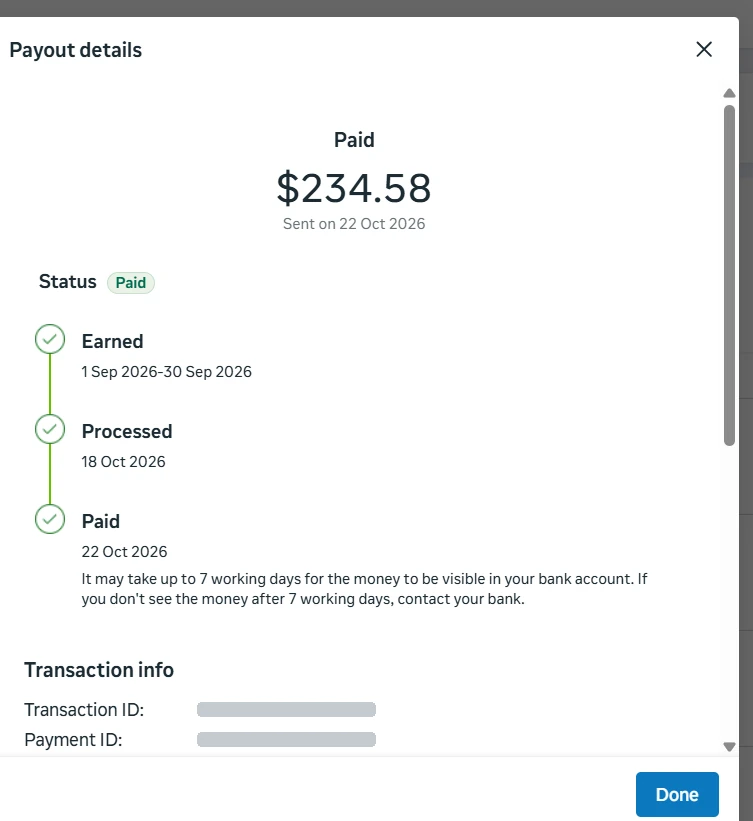
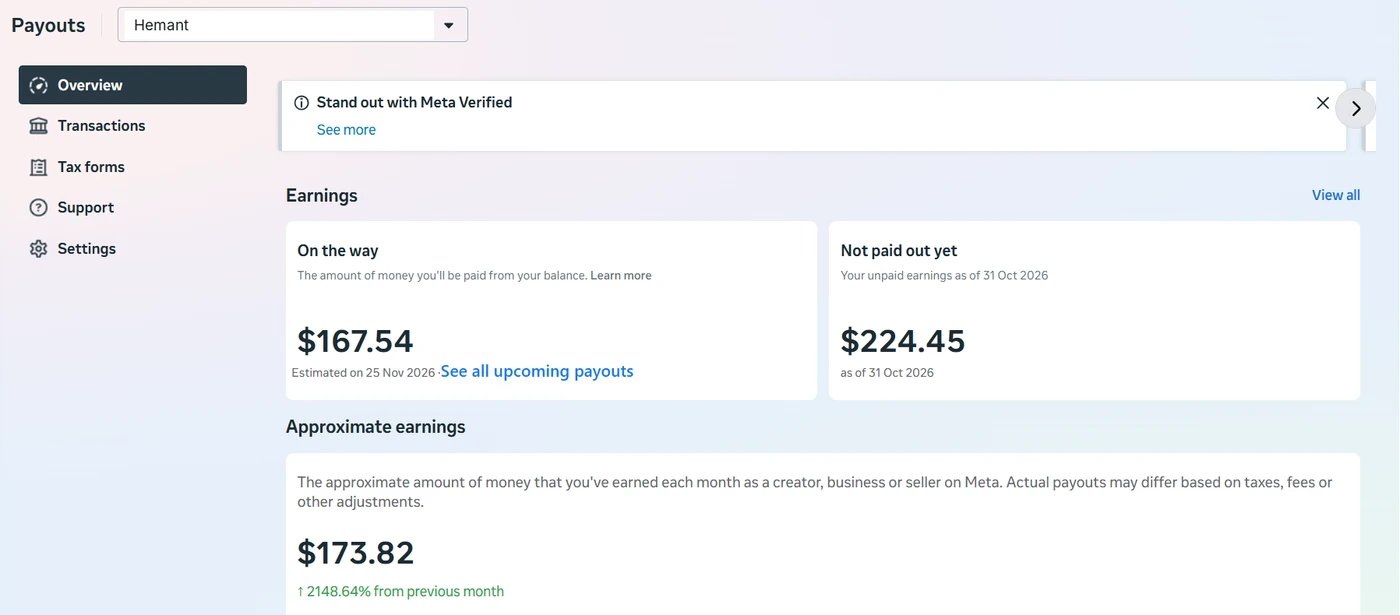
My numbers here are still small, and that is why I am sharing them. In October 2026 Facebook paid me about $235 for what my content earned in September. Another payout of about $170 is already scheduled for late November.
• Startup cost: free.
• Time to first income: 3 to 6 months or more, because you need an engaged page first.
• Upkeep: regular posting, but it can be batched and scheduled.
• Best for: people who enjoy short visual content and can post consistently.
Two cautions. The program is currently invite-only, so you cannot simply apply and get in. You can register your interest from the Monetization tab in your Professional Dashboard, and consistent original content is the main thing that earns an invitation.
The second caution is originality. Meta’s monetization policies reward original content, so copying other pages or reposting the same clips can cost you eligibility. I will share my full Facebook workflow, from research to upload, in a separate post on this blog.
4. Affiliate Marketing
Affiliate marketing means you recommend a product with a special link and earn a commission when someone buys. It fits naturally inside blog posts, Pinterest pins and Facebook content, so it adds income without adding much work.
It is also where my own numbers taught me the most, so I will show you both sides: Amazon and LTK.
What Amazon Really Paid Me
Amazon Associates is the easiest program to join and the easiest to sell from, because almost everyone already shops there. The problem is the commission.
In all of 2025, my links sent nearly 38,000 clicks to Amazon. Shoppers ordered 943 items, and about $17,000 worth of products shipped. My commission for the whole year was about $555.
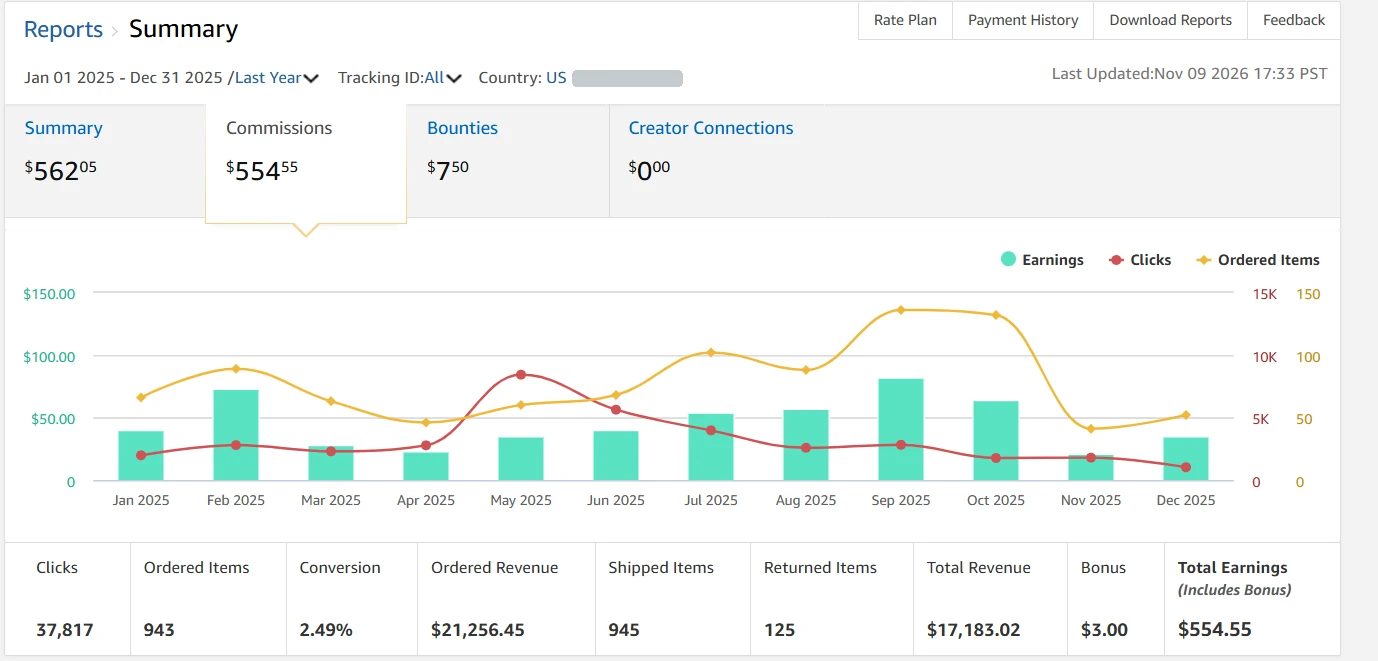
That is roughly 3 cents for every dollar my readers spent. I helped sell $17,000 of products and kept less than what one good month of blog ads pays. This single report is the reason I stopped building my affiliate plan around Amazon.
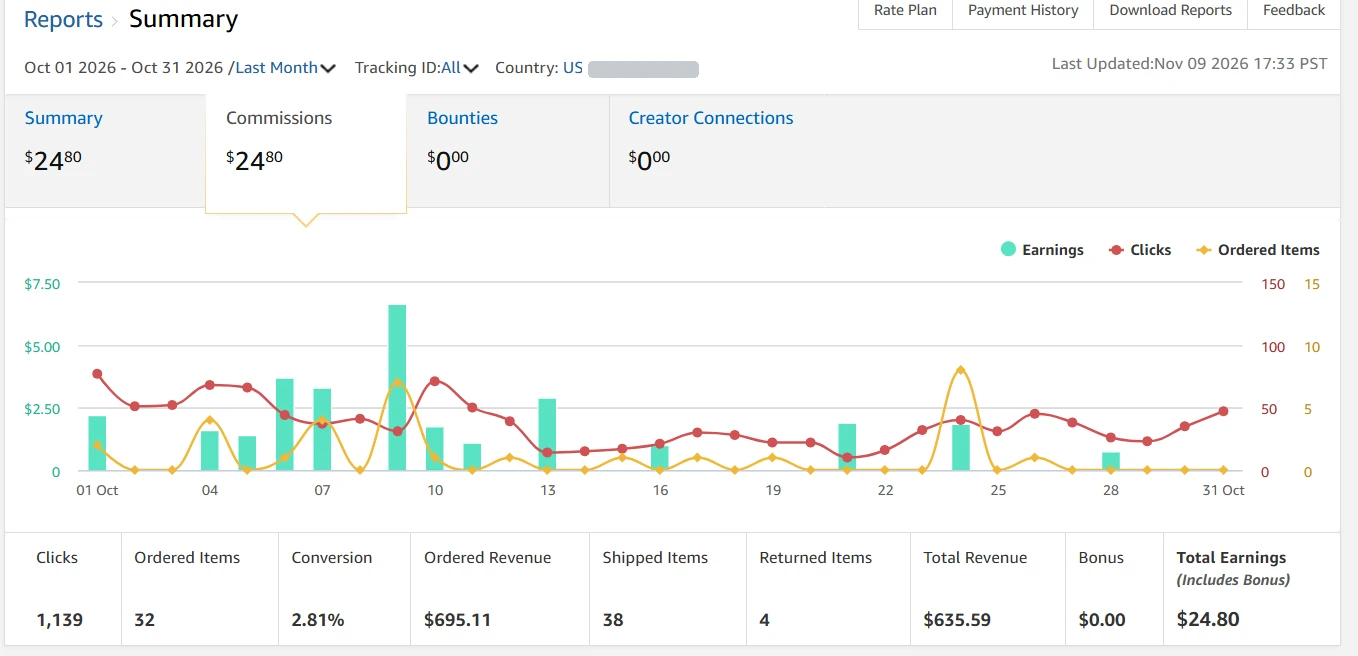
There is one fair point in Amazon’s favor. In October 2026 I was barely promoting it, and old links still brought about 1,100 clicks, 32 orders and close to $25. Nobody would call that a salary, but it arrived with no new work, which is the definition of passive.
Why I Now Prefer LTK
LTK is a creator shopping platform that connects you with thousands of retailers through one account. The difference is in who sets the rate. Amazon fixes a low rate for each category, while on LTK every brand sets its own.
According to LTK, average commissions on the platform fall between 10% and 25%, and some brands pay up to 30%. Not every retailer is that generous, and a few pay less than Amazon, so check the rate shown in the LTK app before you link.
One of my own orders shows the gap. A reader bought a metal plant stand for about $141 through my LTK link, and the commission was about $15, a little over 10%. Home products are commonly listed at 3% on Amazon, which would have paid about $4 for the same order.
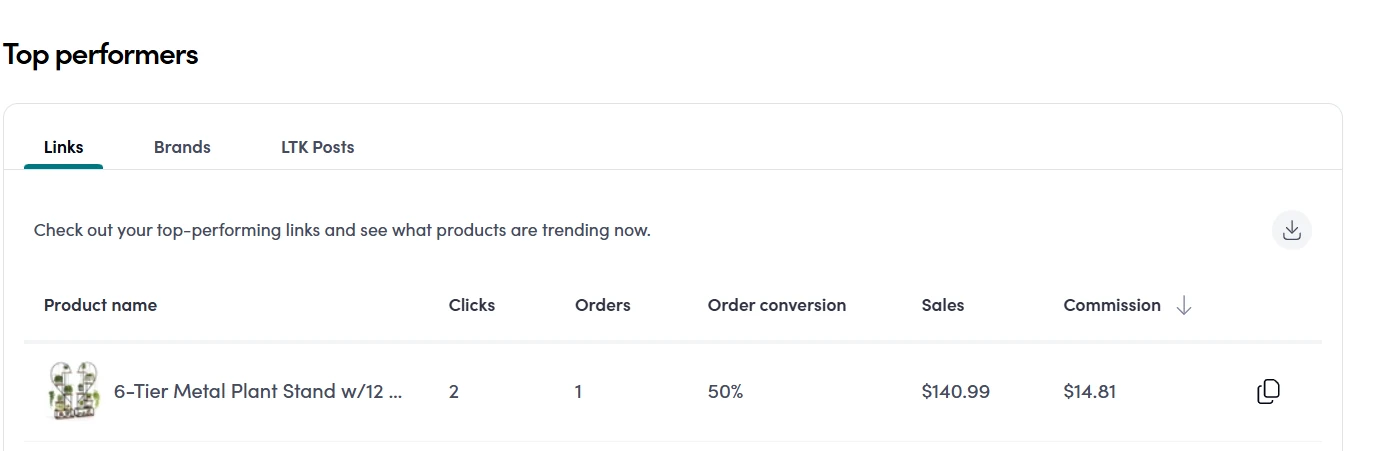
I also do not promote LTK heavily yet, and it still paid out about $86 in the first week of November.
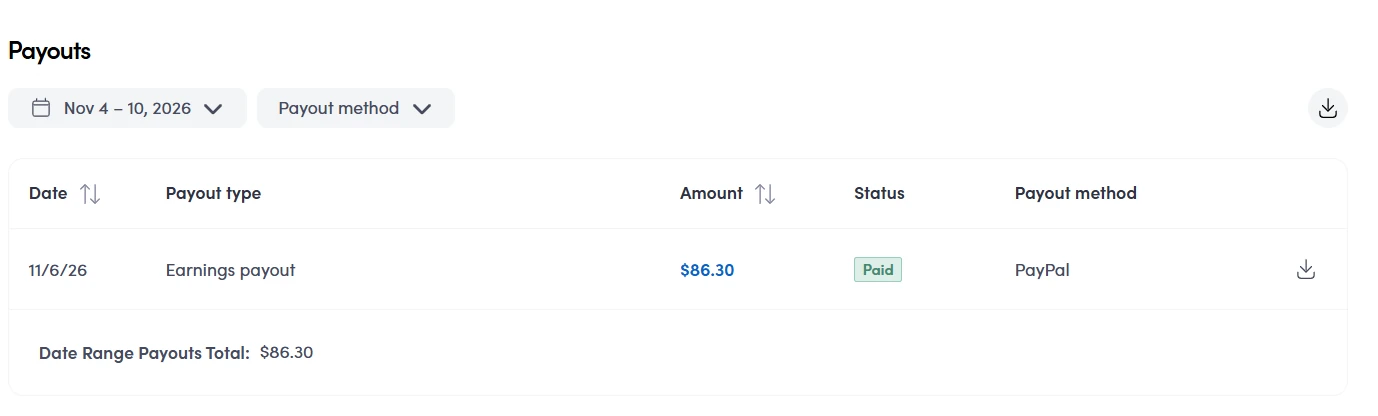
So my advice is simple. If a product is available through LTK, compare the rate there first, because you will often find the same item or a similar one from a brand that pays several times more. LTK does require an application and approval, so build some content and an audience before you apply.
How to Make Affiliate Income Regular
Whatever network you use, there are only two ways to make affiliate income show up every month:
• Promote high-commission products. Software, hosting, courses and digital products often pay 20% to 50% or more per sale.
• Bring high traffic. If you stay with low-commission products, you need a lot of visitors so that small commissions add up every day.
Pick one of those on purpose instead of hoping. If you are comfortable with Amazon, target the categories with better rates and products with higher prices. If you want bigger commissions, look at digital product marketplaces such as ClickBank, Digistore24 and WarriorPlus, where the vendor sets the commission and it is usually much higher.
A few more options sit in between. Networks such as Awin (which absorbed ShareASale in 2025), Impact and CJ connect you with fashion, home and lifestyle brands. Many software and hosting companies also run their own programs, and some pay a recurring commission every month the customer stays.
• Startup cost: free to join most programs.
• Time to first income: 3 to 6 months, once you have traffic.
• Upkeep: low. Check links and replace discontinued products a few times a year.
• Best for: bloggers and social media creators who already publish content.
Amazon Commission Calculator
Use the calculator below to see what a sale really pays and how many sales you need to hit a monthly goal. Rates change, and Amazon reduced several of them again in 2026, so always confirm the current number for your category in your Associates dashboard.
Amazon Affiliate Commission Calculator
See what one sale pays and how many sales you need to reach your monthly goal.
Rates are commonly published Amazon Associates US rates and can change at any time. Edit the rate box to match what your Associates dashboard shows. Estimates only, not a guarantee of earnings.
What a $50 order pays at each commission rate
| Rate | Typical categories | You earn per $50 order | Orders needed for $100 a month |
|---|---|---|---|
| 20% | Amazon Games | $10.00 | 10 |
| 10% | Luxury or premium beauty | $5.00 | 20 |
| 5% | Music, handmade, digital videos | $2.50 | 40 |
| 4.5% | Physical books, kitchen, automotive | $2.25 | 45 |
| 4% | Fashion, jewelry, Amazon devices | $2.00 | 50 |
| 3% | Home, furniture, toys, garden, pets | $1.50 | 67 |
| 2.5% | Computers and components | $1.25 | 80 |
| 2% | Televisions | $1.00 | 100 |
| 1% | Grocery, health and personal care | $0.50 | 200 |
The table explains my preference in one glance. At 3% you need 67 orders for $100, while seven orders like my plant stand sale on LTK would pay the same amount.
5. Pinterest Content That Sends Traffic for Years
Pinterest is the engine behind everything above. A pin is not like a social media post that dies in a day. A good pin can keep sending readers to the same article for months or years, which is exactly what makes blog ads and affiliate links passive.
My blog traffic once came mainly from Google. When that traffic fell to almost nothing, Pinterest became my main source, and it has stayed that way. I now treat every article as something that needs several pins, not one.
• Startup cost: free.
• Time to first income: 2 to 6 months, earned through your blog, affiliate links or products.
• Upkeep: fresh pins every week.
• Best for: visual niches such as home, food, money, travel, beauty and gardening.
Pinterest does not pay you directly for views in most cases. The money comes from where the pin leads: an article with ads, an affiliate product or your own digital product. My complete method is in how to grow on Pinterest, and the click side is in how to increase your Pinterest CTR.
If you want to plan your pins around seasons, download the free Pinterest Seasonal Pinning Calendar 2027.
Part 2: Content Platforms That Pay Over Time
These three ideas also reward work you do once. They are slower and less predictable than Part 1, so they work best as a second or third stream next to something you already run.
6. Self-Publish Ebooks on Kindle
Amazon’s Kindle Direct Publishing lets anyone publish an ebook with no upfront fee. Amazon handles the store, payment and delivery, and you earn a royalty on each copy.
KDP has two ebook royalty options, 35% and 70%. The 70% option applies only inside a set price band that starts at $2.99, and a small delivery fee is deducted based on file size. A $4.99 text ebook on the 70% plan earns about $3.40 per copy.
• Startup cost: free to publish. A good cover is the main optional expense.
• Time to first income: 1 to 3 months.
• Upkeep: low. Occasional updates and a little promotion.
• Best for: people with specific knowledge, and bloggers who can turn their best posts into a deeper guide.
One book rarely earns much. Authors who do well usually publish several related titles in one niche, so each book promotes the others. Short, practical non-fiction and low-content books such as journals and logbooks are the common starting points.
7. Build a YouTube Channel
YouTube videos work like blog posts. A helpful video can be found through search for years, and it earns ad revenue each time it is watched once your channel is monetized.
To earn ad revenue you must join the YouTube Partner Program. The long-standing requirement is 1,000 subscribers plus either 4,000 public watch hours in the past 12 months or 10 million Shorts views in 90 days. YouTube has announced higher thresholds for new applicants from February 2027, so check the current numbers on Google’s help page before you plan.
• Startup cost: free with a phone. A microphone is the first upgrade worth buying.
• Time to first income: 6 to 18 months for most new channels.
• Upkeep: regular uploads until the library is large enough to carry itself.
• Best for: people comfortable teaching or explaining, with or without showing their face.
Faceless channels are popular, but YouTube reviews channels for original content. Videos that are fully automated and add nothing new are the ones most likely to be refused monetization. Use AI for scripts and research, and put your own voice, examples and editing on top.
8. Sell Stock Photos and Video Clips

Stock sites let you upload photos or clips once and earn a royalty each time someone licenses them. It sounds ideal, and for a small number of contributors with large libraries it still works.
The numbers are modest for everyone else. Shutterstock pays contributors 15% to 40% of the license price depending on their level, with a minimum of 10 cents on some downloads, and levels reset every January. Many photo downloads pay only cents.
• Startup cost: low if you already own a camera or a good phone.
• Time to first income: 1 to 6 months.
• Upkeep: low after upload, but earnings fade unless you keep adding files.
• Best for: photographers and videographers who already shoot regularly.
Competition from AI-generated images has also grown. If you try this, video clips and specific local subjects usually pay better than general photos, and uploading the same files to several sites spreads your chances.
Part 3: Create-Once Digital Ideas
These are close cousins of the digital products in Part 1, so everything I said about marketing applies here too. The product is the easy part. Getting it in front of buyers is the job.
9. Sell Canva Templates
Canva templates are editable designs that buyers customize in their own Canva account. Popular types include social media post packs, Pinterest pin templates, media kits, resumes, wedding invitations and business planners.
You design the template in Canva, create a template share link, and deliver that link inside a PDF. Etsy is the most common marketplace, and Gumroad or your own blog work well once you have traffic.
• Startup cost: very low. A Canva account and a marketplace listing.
• Time to first income: weeks to a few months.
• Upkeep: low. Refresh designs when trends change.
• Best for: people with an eye for clean design.
Know your fees before you price. Etsy charges a 20 cent listing fee, a 6.5% transaction fee and payment processing on top. On a $10 template you keep roughly $8.60 before any advertising.
10. Create Printable Wall Art

Printable wall art is a digital file the buyer downloads and prints at home or at a print shop. Quotes, botanical prints, nursery art, seasonal sets and abstract shapes are steady sellers.
Buyers expect several sizes in one purchase, so export each design in the common ratios. Clear mockups that show the art in a real room do most of the selling.
• Startup cost: very low.
• Time to first income: weeks to a few months.
• Upkeep: low, with seasonal additions.
• Best for: designers and illustrators, including beginners with a consistent style.
If you use AI image tools, check each marketplace’s rules on disclosure and make sure you have commercial rights to what you sell. A recognizable style and a tight niche beat a shop full of unrelated designs.
11. Start a Print-on-Demand Shop

With print on demand, you upload a design and a supplier prints it on a t-shirt, mug, tote bag or poster only when a customer orders. You hold no stock and ship nothing yourself.
Services such as Printify and Printful connect to Etsy, Shopify and other stores. The supplier charges you the base cost and you keep the difference, so margins are thinner than with pure digital products.
• Startup cost: very low.
• Time to first income: 1 to 4 months.
• Upkeep: low to medium. Customer questions and occasional reprints come with physical goods.
• Best for: people with design ideas for a clear group, such as a hobby, profession or pet breed.
Order a sample before you promote anything. Print quality and delivery times vary by supplier, and one bad batch of reviews can sink a new shop.
12. Create an Online Course
A course packages what you know into lessons that students buy and watch on their own schedule. It is one of the higher-earning ideas on this list because a single sale can be worth $50 to $500.
It is also more work than most people expect. Recording, editing and organizing a real course takes weeks, and students will have questions after they buy. Marketplaces like Udemy bring their own audience but control pricing, while platforms like Teachable or Gumroad leave pricing and marketing to you.
• Startup cost: low to medium. Screen recording software and a microphone.
• Time to first income: 2 to 6 months.
• Upkeep: medium. Student support and yearly updates.
• Best for: people with a skill others already ask them about.
Test demand first. Sell a small ebook or a one-hour workshop on the same topic, and build the full course only if people pay for the small version.
13. Launch a Paid Newsletter
A paid newsletter charges readers a monthly or yearly fee for your writing. Substack made this simple: it is free to publish, and the platform takes 10% of paid subscription revenue, with card processing extra. On a $10 monthly subscription you keep about $8.40.
I include it because it appears on almost every passive income list, but it is the least passive idea here. Subscribers pay for the next issue, so the income stops when the writing stops.
• Startup cost: free.
• Time to first income: 3 to 12 months, after you build a free audience.
• Upkeep: high. A new issue every week.
• Best for: writers with specialist knowledge readers cannot easily find elsewhere.
14. Build a Membership Site
A membership gives paying members ongoing access to something: a resource library, a community, monthly templates or new lessons. Recurring payments make income more predictable than one-off sales.
The work is in keeping members. People cancel when they stop getting value, so you need a steady supply of new material or an active community. A library of downloads is the lightest version to run.
• Startup cost: low. Membership plugins and platforms start at a small monthly fee.
• Time to first income: 3 to 12 months.
• Upkeep: high compared with other ideas here.
• Best for: creators who already have an audience and several digital products.
15. Sell Presets and Notion or Website Templates
This group covers small digital tools that save buyers time: Lightroom presets for photo editing, Notion templates for planning, and website themes or page templates.
Presets suit photographers with a recognizable editing style. Notion templates suit organized people who build systems for budgets, study, content planning or habit tracking. Website templates need real technical skill and pay more per sale.
• Startup cost: very low.
• Time to first income: weeks to a few months.
• Upkeep: low. Update when the software changes.
• Best for: people who already use these tools daily and have built something others ask for.
Part 4: Passive Income From Money and Things You Own
The last three ideas use assets instead of content. They are quicker to start, and two of them need capital. This section is general education and not personal financial advice, so consider speaking with a licensed adviser before investing.
16. Rent Out Gear, Storage or a Parking Space
If you own something that sits unused, someone nearby may pay to use it. Common examples are camera equipment, camping gear, tools, a spare room or garage for storage, and a driveway or parking space near a station, stadium or city center.
Peer-to-peer rental platforms exist for most of these and handle booking and payment. Availability differs by country and city, so search for the services active in your area.
• Startup cost: free if you already own the item or space.
• Time to first income: days to weeks.
• Upkeep: low to medium. Handover, cleaning and wear.
• Best for: people in busy areas with spare space or quality equipment.
Check three things first: your insurance cover, any rules from your landlord or homeowners association, and how the income is taxed where you live.
17. Open a High-Yield Savings Account
This is the simplest idea on the list. A high-yield savings account pays far more interest than a standard one, and your money stays available.
In the United States in November 2026, the best accounts pay around 4% APY or a little more, while the national average savings rate reported by the FDIC is under half a percent. On $5,000, that is roughly $200 a year instead of about $19.
• Startup cost: whatever you can save.
• Time to first income: the first month.
• Upkeep: none. Compare rates once or twice a year.
• Best for: emergency funds and short-term savings.
Rates are variable and can fall. It will not make anyone rich, but it is the right home for an emergency fund, which I think everyone should build before trying riskier ideas. My saving habits are in 45 frugal living tips.
18. Invest in Dividend Funds and REITs
Dividend funds hold shares in companies that pay out part of their profits regularly. A real estate investment trust, or REIT, owns income-producing property such as apartments, warehouses and shopping centers, and lets you invest in real estate without buying a building.
REITs are known for income because of one rule. To keep their tax status in the United States, they must distribute at least 90% of their taxable income to shareholders each year, according to the SEC.
• Startup cost: your capital. Many brokers allow small amounts and fractional shares.
• Time to first income: the first quarter or month, depending on the fund.
• Upkeep: very low.
• Best for: long-term investors who already have an emergency fund.
Unlike a savings account, your money is at risk. Prices rise and fall, dividends can be cut, and REIT dividends are generally taxed as ordinary income in the US. Broad, low-cost funds spread that risk better than single stocks.
Mistakes I Made Chasing Passive Income
Most of my mistakes happened in blogging, because that is where I spent the most years. These are the ones that cost me the most.
Building an audience where ad rates are low
For a long time, most of my readers came from countries where advertisers pay very little. My traffic numbers looked healthy and my earnings stayed small. I was working hard on the wrong audience.
The same thousand views can earn several times more when readers are in the United States, Canada, the United Kingdom or Australia. If ad income is your goal, choose topics, keywords and a traffic source that reach those readers from the start. Pinterest helped me fix this.
A messy move from Blogger to WordPress
I began on Blogger and later moved to WordPress, and I handled the transfer badly. A blog migration touches every URL, image and internal link on your site, and small errors there can undo years of work.
If you are moving a blog, keep your URL structure the same or redirect every old address to the new one, check that images moved with the posts, and test the site before you point your domain. Better still, start on WordPress so you never need to move.
Relying on one traffic source
My traffic once depended on Google, and when it dropped I had nothing else. Now I treat traffic like income and spread it across Pinterest, Facebook and search.
Spending on ads before learning marketing
With digital products, I learned that a good product does not sell itself. Money spent on ads without a tested offer and a clear audience is money lost. Learn with small budgets or free traffic first.
How to Pick Your First Passive Income Idea
You do not need 18 income streams. You need one that fits what you have right now.
• If you have time but no money: start a niche blog with Pinterest, a Facebook page or a small digital product.
• If you have a skill: package it as a template, preset, ebook or short course.
• If you have savings but little time: a high-yield savings account first, then broad dividend funds once your emergency fund is full.
• If you own unused things: rent out the gear, space or parking spot.
Then follow three rules. Pick one idea and give it at least six months. Track your hours and your earnings so you can see the truth. Add a second stream only after the first one runs without daily attention.
What I Would Skip as a Beginner
Some ideas are better saved for later. A paid newsletter or membership is hard without an existing audience, because nobody is there to subscribe. Stock photos pay too little to be a first choice unless you already shoot every week.
I would also avoid anything sold as fully automated income. Fully automated YouTube channels, done-for-you stores and copy-and-paste systems usually cost money upfront and run into platform rules later. If the sales page promises income with no work, the seller is the one earning.
Frequently Asked Questions
What is the easiest passive income idea for beginners?
A high-yield savings account is the easiest because it needs no skill. Among ideas that need no capital, a simple digital product such as a planner or checklist is the quickest to create and test.
Can I start passive income with no money?
Yes. Facebook content, Pinterest, affiliate marketing and digital products made in free tools can all be started without spending. A blog needs only a small hosting cost.
How long does it take to earn passive income?
Savings interest starts in the first month. Content-based ideas such as blogging, YouTube and Pinterest usually take 6 to 12 months to show real results, and sometimes longer.
Is Amazon affiliate marketing worth it?
It is worth using, but not worth depending on. Amazon converts well and old links keep earning, yet most categories pay only a few percent. Compare each product on networks like LTK, where brands often pay more.
Is blogging still worth it?
For me, yes. It is slow at the start, but ad income from a blog with steady traffic is the most hands-off money I earn. It works best when you choose a niche with readers in high-paying countries and do not depend on one traffic source.
Is passive income really passive?
Not at the beginning. Every idea needs setup work, and most need some upkeep. It becomes passive when past work keeps earning without the same effort being repeated.
Can I use AI to create passive income products?
Yes, as a helper. Tools like ChatGPT, Claude and Google Gemini speed up outlining, drafting and design ideas. Edit the output, add your own experience and check every fact, because platforms and buyers both reward original, useful work.
Final Thoughts
Passive income is built, not found. The ideas that pay me today all started as months of unpaid work, and most of my early attempts failed before one worked.
Choose one idea from this list, start small and stay with it long enough to learn. For more guides like this, follow Trek Pelican on Pinterest.
Sources
• YouTube Help: YouTube Partner Program overview and eligibility
• Meta for Creators: How you earn on Facebook Content Monetization
• Kindle Direct Publishing: eBook royalties
• Shutterstock Contributor Help: How much will I be paid
• eRank: Etsy seller fees explained
• SchoolMaker: Substack pricing and fees
• Digiday: LTK commission rates, as stated by the company
• Lasso: Amazon affiliate commission rates
• Novadata: Amazon Associates commission changes, May 2026
• Bankrate: Best high-yield savings account rates
• U.S. Securities and Exchange Commission: Investor Bulletin on REITs