9 Money Mistakes I Made in My 20s (And How I Fixed Them)

This post may contain affiliate links. If you buy through them, I may earn a small commission at no extra cost to you. Read our full affiliate disclosure
I’m still in my 20s, so the money mistakes in this post aren’t distant memories. Some of them happened only a few years ago, and I can still remember exactly how each one felt.
Nobody sat me down and taught me how money works. I learned it the hard way, by running out of cash, overspending on a credit card and building income on a foundation that collapsed. Every mistake cost me something, whether it was money, stress or time I couldn’t get back.
The good news is that every one of them was fixable.
In this post, I’ll walk you through the nine money mistakes that taught me the most, what each one cost me, how I fixed it and what you can do today so you don’t have to learn the same lessons the hard way.
Plan every month before it starts. Save first, not last. Keep an emergency fund in a separate account. Treat a credit card as a payment tool, not extra income. Plan for the holidays all year. And never let one income source, one platform or one audience hold your whole future.
Why Your 20s Are the Best Time to Fix Money Mistakes
Your 20s are when money habits form. The way you handle your first paychecks, your first credit card and your first real bills often becomes the way you handle money for decades. That’s why mistakes in this decade feel so heavy, and why fixing them early pays off so well.
Time is the biggest advantage you have. Here’s a simple example using a 7% average annual return, which is a hypothetical rate for illustration, not a promise:
| Start saving $200 a month at | Years until 65 | You put in | Estimated value at 65 |
|---|---|---|---|
| Age 25 | 40 | $96,000 | About $525,000 |
| Age 35 | 30 | $72,000 | About $244,000 |
Starting 10 years earlier means putting in $24,000 more but ending up with roughly twice as much, because the early money has more time to grow. Real returns go up and down, and investing always carries risk, but the lesson holds: the earlier you fix your habits, the more time works for you instead of against you.
That’s why I’m sharing my mistakes now, while they’re fresh, instead of years from now.

Mistake 1: I Had No Idea What My Life Actually Cost
What I did
When I moved away for college, I had never managed money on my own. My parents sent one fixed amount each month, and it had to cover everything from rent to food to daily essentials. I had no idea what any of those things actually cost.
So I spent like someone who had never seen a bill. I ate out often, bought things I didn’t need and never once added up where the money was going. I assumed it would last because I didn’t know how to check.
What it cost me
It didn’t last. One day I realized I had almost nothing left, and when money finally arrived, a stressful moment at the ATM locked my account for a day. All I could afford was a loaf of bread and a bottle of water. I’ve shared that full story in my post on frugal living tips, and it’s still the day I think of first when I think about money.
After that, my parents were clear: there would be no extra money. Whatever they sent was the amount, and I had to make it work.
How I fixed it
I started with one rule: food first. As soon as my monthly money arrived, I set aside what I needed for food before anything else. Then I planned the rest of the month around what was left.
That simple habit grew into the way I still budget today. Before every month starts, I write down what I expect to earn and spend, so there are no surprises halfway through.
What you can do today
• Write down your fixed monthly costs: rent, food, transport, phone and bills.
• Estimate one day of food spending, then multiply it by 30 to get a realistic monthly figure.
• Protect your most important need first, before you plan anything fun.
Mistake 2: I Treated Leftover Money as Savings
What I did
Early on, my idea of saving was simple: spend what I need, and whatever is left at the end of the month becomes savings. It sounded sensible. It almost never worked.
What it cost me
There was rarely anything left. Spending has a way of expanding to fill whatever money is sitting in your account. A coffee here, a small purchase there, and by the last week of the month, “savings” meant zero.
How I fixed it
I flipped the order. Savings come out first, the day money arrives, and I live on what remains. Once I started earning properly, that became a fixed 20% moved to a separate account every month. I explained the full habit in my post on building an emergency fund by saving the same amount every month.
The amount mattered far less than the order. A small deposit made first beats a bigger deposit you only plan to make later.
What you can do today
• Pick a fixed amount or percentage you can save even in a tight month.
• Schedule an automatic transfer for payday, or set a reminder for the day money arrives.
• Treat that transfer like a bill you owe your future self.
Mistake 3: I Had No Emergency Fund
What I did
Like many people in their early 20s, I thought emergencies were rare, dramatic events. I didn’t think I needed money set aside for something that probably wouldn’t happen.
What it cost me
Emergencies turned out to be small, ordinary and frequent. Without a cushion, every surprise expense felt like a crisis, and the stress of not knowing how I’d cover the next one followed me around.
I’m far from the only one. In the Federal Reserve’s latest household survey, released in May 2026, 63% of U.S. adults said they would cover a surprise $400 expense with cash or its equivalent. That leaves more than a third who would need to borrow, sell something or couldn’t pay at all.
How I fixed it
I started keeping my emergency savings in a separate account that I don’t touch for everyday spending. That fund has covered the real-life surprises since: a phone that started hanging constantly, and minor medical costs like a fever or a bad cold.
None of these were dramatic. That’s exactly the point. A fund turns small emergencies into small problems instead of big ones.
What you can do today
• Open a separate savings account and name it “Emergency Fund.”
• Set your first goal at $400, then $1,000, then one month of expenses.
• Decide in advance what counts as an emergency, so a sale doesn’t sneak in.
Mistake 4: I Used My First Credit Card Like Extra Income
What I did
My first credit card felt like freedom. During one holiday season, I used it for gifts, plans and everything else the season seemed to demand. I didn’t feel the cost while I was spending, because the money wasn’t leaving my account yet.
What it cost me
When the bills arrived, my card was at about 70% of its limit. That’s a stressful place to be, and it isn’t great for your credit either. Experts generally recommend keeping credit utilization below 30%, and the “amounts owed” category, which includes utilization, makes up about 30% of a FICO score.
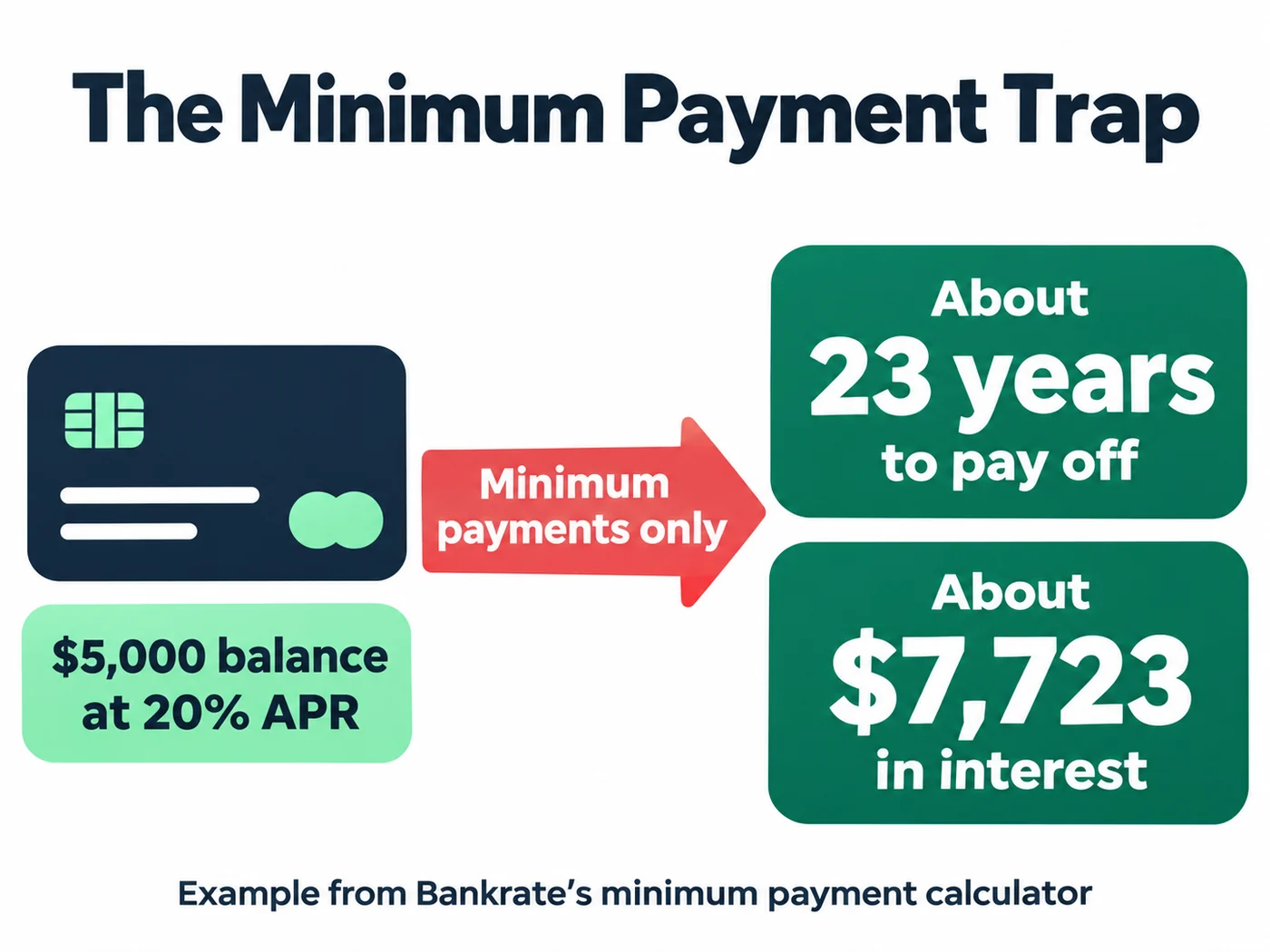
Carrying a balance is also expensive. Bankrate’s average credit card interest rate was 19.71% in early November 2026. On a $5,000 balance at 20% APR, paying only the minimum could keep you in debt for about 23 years and cost roughly $7,723 in interest, according to Bankrate’s minimum payment calculator.
How I fixed it
I faced the number instead of avoiding it. I wrote a plan, cut spending hard for a short period and used extra income from blogging and Facebook to pay the balance down faster. I walked through that full reset in my post on how to recover financially after the holidays.
The bigger fix was a change in how I see credit cards. A card is a payment tool, not extra income. If I can’t pay the full balance when the statement arrives, I can’t afford the purchase yet.
What you can do today
• Check your utilization: divide your balance by your credit limit.
• Pay more than the minimum every month, even if it’s only a little more.
• Use the card only for purchases already in your budget.
• Set up autopay for at least the minimum so you never miss a payment.
Mistake 5: I Didn’t Plan for the Holidays
What I did
Every year, the holiday and festival season seemed to arrive as a surprise, even though it comes at the same time every year. Gifts, celebrations, travel and events all landed in the same few weeks, and I paid for them out of whatever happened to be in my account.
What it cost me
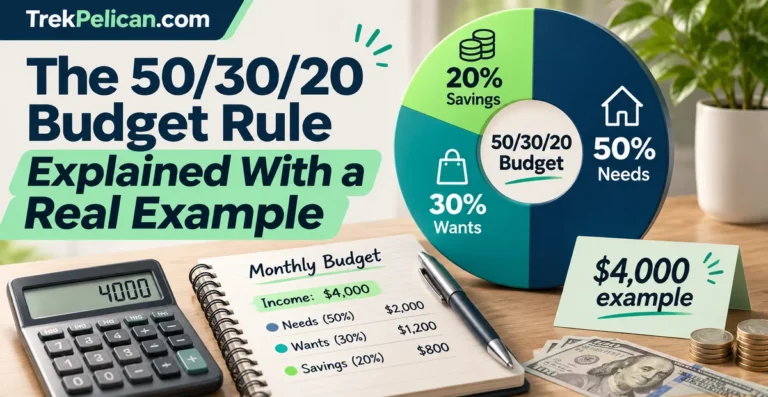
One expensive month could undo several good ones. Even now that I follow the 50/30/20 rule, the holidays are still the season where my wants bucket overflows. I wrote about that in my post on the 50/30/20 budget rule with a real example.
Holiday spending is big for almost everyone. The National Retail Federation forecast that U.S. holiday sales in November and December 2026 would grow 4.2% to about $1.013 trillion.
How I fixed it
I started treating the holidays like a bill that arrives once a year. A small amount set aside every month means December is paid for before it starts. The same idea works for birthdays, weddings, annual subscriptions and any other cost you know is coming.
What you can do today
• Estimate your total holiday cost: gifts, food, travel, decorations and events.
• Divide it by the number of months left and save that amount monthly.
• Make your gift list before the sales start, not during them.
Plan the Holidays Before They Plan Your Budget
The Holiday-Proof Money Planner helps you set a holiday budget, plan gifts and events, and track every dollar, so the season never ends in a credit card bill you didn’t expect.
Get the Holiday-Proof Money Planner →Mistake 6: I Depended on One Source of Income
What I did
For years, most of my blog traffic came from Google search. Traffic meant ad income, and it felt steady enough that I didn’t think much about what would happen if it changed.
What it cost me
Then it did change. By April 2024, my Google traffic had fallen to almost nothing. Income built on one source can disappear just as quickly as that source does, and I had very little to fall back on.
It’s one of the hardest lessons for anyone earning online, and it applies to regular jobs too. If one employer, one client or one platform pays all your bills, a single decision outside your control can change your whole month.
How I fixed it
I rebuilt on more than one foundation. Pinterest became my main traffic source, and I added income from Facebook content, affiliate programs like Amazon and LTK, and later digital products. No single source now decides whether I have a good month or a bad one.
If you’re thinking about adding a second income stream, my list of passive income ideas and my guide to side hustles that actually pay are good places to start.
What you can do today
• List every source of income you have and what percentage each one provides.
• If one source is over 80%, start building a second, even a small one.
• Build your emergency fund bigger than average if your income is irregular.
Mistake 7: I Built an Audience That Paid Very Little
What I did
When I started blogging seriously, I was happy with any traffic I could get. I didn’t think about where my readers were or how much advertisers would pay to reach them.
What it cost me
Most of my early audience came from a region where ad rates were low. I could have thousands of pageviews and still earn very little, because the RPM, or revenue per thousand pageviews, was a fraction of what the same traffic earns from higher-paying countries. I put in the same hours for much less money.
How I fixed it
I changed who I was writing for. I started creating content for readers in the U.S., U.K., Canada and Australia, where advertisers usually pay much more, and I used Pinterest to reach them. The difference in earnings for the same amount of work was huge.
You can see how that shift showed up in my numbers in my blog income report, and I’ve shared practical ways to raise earnings per visitor in my guide on how to increase ad RPM. (Results vary for everyone; see my earnings disclaimer.)
What you can do today
This lesson goes beyond blogging. Whatever you sell, whether it’s a skill, a service or a product, ask who values it most and is able to pay for it. Effort pointed at the right audience is worth far more than effort pointed at any audience.
Mistake 8: I Rushed a Big Move Without a Checklist
What I did
When I moved my blog from Blogger to WordPress, I treated it like a simple switch. I didn’t plan every step in advance, and I made a mistake during the transfer that I then had to spend time fixing.
What it cost me
Time is money when your income depends on your website. Every hour spent fixing a problem was an hour not spent creating content that earns. A rushed decision turned into a slow, frustrating cleanup.
How I fixed it
Now, any big change to something that earns money gets a written checklist first. That goes for moving a website, changing hosting or redesigning, and it also applies to big personal money moves like switching banks or changing jobs.
What you can do today
If you’re moving a website, these are the basics most migration guides recommend:
• Back up everything first: posts, images and settings.
• Keep the same post URLs where possible, or set up proper redirects.
• Test the new site before switching your domain over.
• Check your traffic and earnings closely for a few weeks after the move.
If you’re starting fresh rather than moving, my guide on how to start a WordPress blog on Hostinger walks through the setup step by step.
Mistake 9: I Didn’t Track the Small Stuff
What I did
In those first college months, I watched big expenses like rent and ignored the small ones. A snack here, a coffee there, a small purchase because it was cheap. None of them felt like a real expense.
What it cost me
Small purchases are where budgets quietly leak. Ten $5 purchases are $50, and $50 a week is about $2,600 a year. I couldn’t see that until I started writing every purchase down.

How I fixed it
I started tracking everything. Today, I still prefer a notebook for my budget, because writing numbers by hand makes me notice them more. I keep the same notes in an app on my phone as a backup, and I split my money using the 50/30/20 rule: 50% for needs, 30% for wants and 20% for savings.
What you can do today
• Write down every purchase for 30 days, no matter how small.
• At the end of each week, total your “small stuff” and see what it adds up to.
• Pick one small habit to cut or reduce, and move that money to savings.
Get the Free 50/30/20 Monthly Budget Planner
Plan your month, track needs, wants and savings, and review what worked, all in one fillable PDF. It includes a seasonal costs page so the holidays never catch you off guard. Free, with no signup needed.
Download the Free Planner →5 Money Books Worth Reading in Your 20s
Mistakes teach you fast, but books can teach you before the mistake happens. If you want to go deeper on the lessons in this post, these five are some of the most recommended personal finance books for people in their 20s.
1. The Psychology of Money by Morgan Housel
The Psychology of Money explains why doing well with money depends more on behavior than on knowledge. It’s a short, story-driven read that fits Mistakes 1, 2 and 9: knowing what to do is easy, but actually doing it every month is the hard part.
2. I Will Teach You to Be Rich by Ramit Sethi
I Will Teach You to Be Rich is a six-week program for setting up automatic savings, handling credit cards and spending guilt-free on what you love. It’s a strong next step if Mistakes 2 and 4 sounded familiar.
3. Your Money or Your Life by Vicki Robin and Joe Dominguez
Your Money or Your Life is built around tracking every dollar and asking whether each purchase is worth the hours you worked for it. If you’re working on Mistake 9, this book changes how small purchases feel.
4. The Total Money Makeover by Dave Ramsey
The updated edition of The Total Money Makeover lays out a step-by-step plan for building a starter emergency fund and paying off debt. Its approach is strict, but it’s very clear if you’re dealing with Mistakes 3 and 4.
5. The Simple Path to Wealth by JL Collins
The Simple Path to Wealth is a beginner-friendly guide to long-term investing with low-cost index funds. Once your emergency fund and budget are in place, it’s a good place to learn how to put time on your side, as shown earlier in this post.
How to Avoid These Mistakes in Your 20s
If you only take one thing from this post, let it be this checklist. You don’t need to do everything at once. Pick the one that hurts most right now and start there.
“I’ll save whatever is left at the end of the month.”
Flip the order. Move a fixed amount to savings the day money arrives, then live on the rest. Start small if you need to; the habit matters more than the amount.
“I don’t really need an emergency fund.”
Most emergencies are small and frequent: a broken phone, a medical bill, a car repair. Start with a $400 goal in a separate account, then grow it to one month of expenses.
“I only pay the minimum on my credit card.”
Minimum payments can stretch a balance out for decades. Pay more than the minimum every month, keep utilization under 30% and only charge what’s already in your budget.
“The holidays always wreck my budget.”
Estimate the total, divide it by the months left and save that amount every month. December gets paid for before it arrives.
“All my income comes from one place.”
Start a second income stream, even a small one, and keep a bigger emergency fund until it grows. One decision you can’t control shouldn’t decide your whole month.
“I don’t know where my money goes.”
Track every purchase for 30 days, then split your income with the 50/30/20 rule. The small stuff is usually where the leak is.
The 9-point checklist
1. Know your real costs. Write down what your life costs each month.
2. Save first. Move savings the day money arrives.
3. Build an emergency fund. Start with $400 in a separate account.
4. Respect your credit card. Pay it in full, or at least more than the minimum.
5. Plan for the holidays. Save a little every month for the season.
6. Diversify your income. Don’t let one source decide your future.
7. Find the right audience. Put your effort where it’s valued most.
8. Use checklists for big moves. Plan before you switch anything that earns.
9. Track the small stuff. Small purchases add up faster than you think.
Frequently Asked Questions
What is the biggest money mistake people make in their 20s?
Not having a plan. Most other mistakes, like credit card debt, no emergency fund and no savings, come from spending without knowing where the money should go. A simple monthly plan made before the month starts fixes a lot of them at once.
How much should I save in my 20s?
The 50/30/20 rule suggests 20% of take-home pay for savings and extra debt payments. If that isn’t realistic yet, start with 5% or 10% and raise it as your income grows. Consistency matters more than the starting number.
Should I have a credit card in my 20s?
A credit card can help you build credit if you use it carefully. Pay the full balance each month when you can, keep utilization below 30% and never treat your credit limit as extra income.
How do I build an emergency fund on a low income?
Start small and stay consistent. Save a fixed amount every month, even $25, in a separate account. Aim for $400 first, then $1,000, then one month of essential expenses.
Is it too late to fix money mistakes if I’m almost 30?
Not at all. Every habit in this post can be started at any age. The sooner you begin, the more time your savings have to grow, but the best time to start is still today.
What I’d Tell My Younger Self
If I could go back to my first month of college, I wouldn’t give myself a long lecture. I’d give myself four short sentences.
• Plan the month before it starts. Every good habit I have today grew out of that one.
• Save first, even if it’s tiny. The habit is worth more than the amount.
• Don’t spend money you haven’t earned yet. A credit card limit is not income.
• Never trust one source with everything. Not one platform, not one income, not one audience.
None of these are complicated. The hard part is starting before a painful moment forces you to. If you’re reading this before your own bread-and-water day, you already have an advantage I didn’t.
Mistakes Are Expensive Lessons, So Use Them
I don’t regret these mistakes as much as I used to. Each one taught me something that a book or a video never could, and together they shaped how I handle money today.
But you don’t have to pay the same price to learn the same lessons. Pick one fix from this list, start it this month and add another next month. A few small changes in your 20s can make the rest of your life a lot calmer.
For more honest money lessons and budgeting tips, follow Trek Pelican on Pinterest so you don’t miss upcoming posts.
Sources
• Board of Governors of the Federal Reserve System, Economic Well-Being of U.S. Households in 2025 (May 2026)
• Bankrate, Current credit card interest rates (November 2026)
• Bankrate, Credit utilization ratio
• Experian, Is 0% Utilization Good for Credit Scores?
• National Retail Federation, NRF Forecasts 2026 Holiday Sales Growth (October 2026)